
Personal mobility is undergoing a major global transformation. Electric propulsion, lightweight materials, digital control systems and efficient engineering are rapidly reshaping transportation across land, air and now increasingly across water.
Electric foil boards are emerging as one of the most fascinating examples of this transition within marine recreation.
While currently viewed primarily as premium watersports products, electric foil boards are also demonstrating technologies and engineering principles that may influence the broader future of personal marine mobility itself.
By combining hydrofoil lift with electric propulsion, foil boards showcase how efficient, quiet and highly manoeuvrable marine movement may evolve over the coming decades.
The significance of electric foil boards extends beyond recreation alone. They represent a glimpse into future approaches to lightweight and energy-efficient water transport.
Traditional personal marine transport has historically relied on:
Modern consumers increasingly seek alternatives that provide:
Electric foil boards strongly align with these changing expectations.
Their operation demonstrates how electric propulsion and advanced hydrodynamics may dramatically improve marine efficiency and user experience.
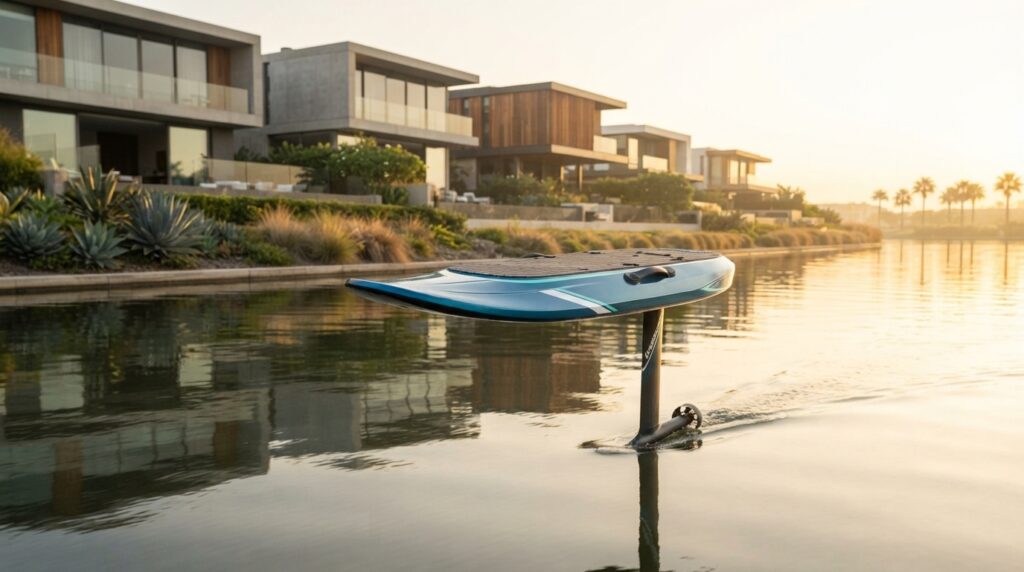
One of the defining technologies behind electric foil boards is hydrofoil lift.
As speed increases, the hydrofoil generates lift that raises the board above the water surface.
This dramatically reduces drag because only the narrow mast and foil remain submerged.
Lower drag improves:
The ability to reduce resistance so dramatically is one reason hydrofoil technology is attracting broader interest within marine engineering.
Electric motors are particularly well suited to hydrofoil systems because they provide:
Electric propulsion allows foil systems to operate without relying on:
This creates a much more refined and efficient style of water movement.
Many engineers see electric hydrofoil systems as an important direction for future lightweight marine transport.
Traditional marine engines create substantial:
Electric foil boards operate remarkably quietly.
This quieter operation creates a more:
form of marine mobility.
As waterways become increasingly crowded and urban waterfront development expands, quieter marine transport solutions may become increasingly desirable.
Electric foil boards rely heavily on lightweight engineering using materials such as:
Reducing weight improves:
Lightweight construction principles demonstrated in foil boards may increasingly influence future marine mobility systems.
Many cities worldwide are exploring alternative transportation systems for urban waterways.
Hydrofoil efficiency may eventually influence future development of:
Electric foil boards are helping familiarise consumers with hydrofoil technology in a highly visible recreational format.
Consumer familiarity plays a major role in technology adoption.
Electric foil boards help introduce broader audiences to concepts involving:
As consumers become more comfortable with these technologies recreationally, acceptance of broader electric marine transport systems may also increase.
Traditional boats often generate significant wake due to surface displacement.
Hydrofoil systems generate relatively minimal wake once lifted above the surface.
Reduced wake may become increasingly valuable in:
Cleaner hydrodynamic movement supports more efficient and less disruptive water transport.
Modern lithium battery systems are improving rapidly through advances in:
These improvements are critical not only for recreational foil boards but also for broader electric marine mobility development.
As battery technology improves, practical applications for lightweight electric marine transport will continue expanding.
Future electric hydrofoil systems may increasingly incorporate:
These technologies may help make hydrofoil-based marine mobility systems safer and easier for mainstream users.
Electric foil boards are already beginning to integrate advanced electronic ride management systems.
Governments, businesses and consumers increasingly prioritise:
Electric hydrofoil systems strongly align with these goals.
The efficiency advantages created by reduced drag make hydrofoil systems especially attractive for future sustainable marine transport concepts.
Luxury markets frequently become early adopters of emerging technologies.
Electric foil boards already appeal strongly within:
This early luxury adoption may help accelerate broader development and investment into electric marine mobility technologies.
Australia’s extensive waterways and outdoor recreation culture create excellent conditions for future electric marine mobility development.
Potential applications may eventually extend beyond recreation into:
Australia’s marine lifestyle culture strongly supports experimentation with innovative marine technologies.
Despite enormous potential, electric hydrofoil mobility systems still face challenges involving:
However, rapid technological advancement is steadily addressing many of these issues.
The efficiency demonstrated by electric foil boards is already attracting attention from broader marine industries.
Hydrofoil concepts are increasingly being explored for:
Foil boards effectively act as highly visible proof-of-concept platforms for efficient electric marine movement.
Electric foil boards represent far more than simply another recreational trend.
They showcase how advanced hydrodynamics, electric propulsion and lightweight engineering may reshape personal marine mobility in the future.
As technology continues evolving, the principles demonstrated by electric foil boards are likely to influence broader marine transport innovation well beyond the recreational watersports industry itself.
See More at www.vectorwatercraft.com.au