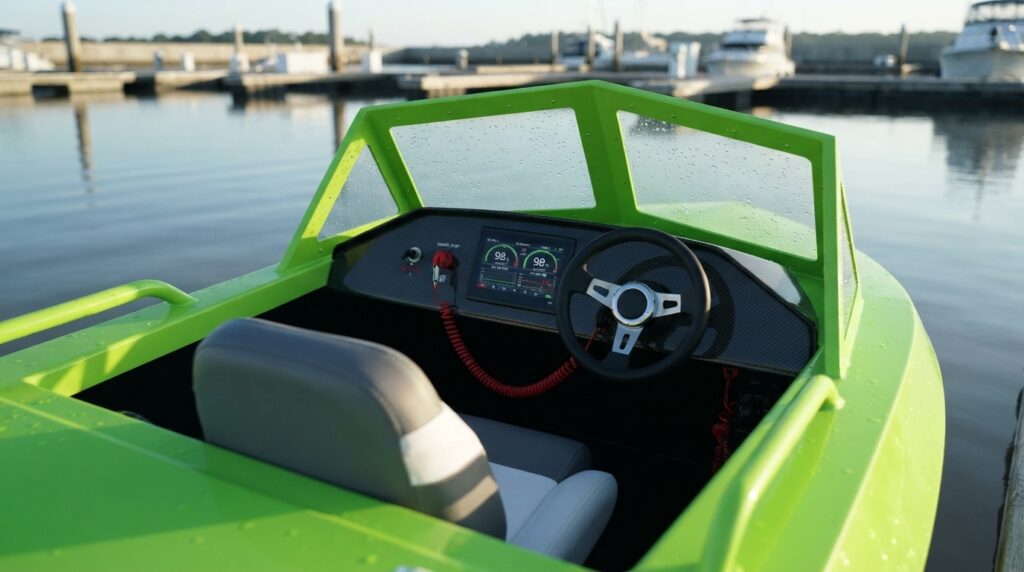
Experienced boat operators develop pre-departure routines almost without thinking about them, but for newer owners — or simply as a genuinely useful reference for building good habits — having an explicit, comprehensive checklist makes it far less likely that something important gets overlooked in the enthusiasm of heading out for a quick outing. This checklist draws together the safety and preparation themes discussed throughout this series into a single, practical pre-departure routine.
Battery and Charge Status
- Confirm the battery is charged to a level appropriate for the planned outing, factoring in the realistic range considerations discussed in the range and runtime articles, not simply assuming a full charge automatically covers any planned trip
- Check that charging connections and any related electrical components appear in good condition, free from visible damage or corrosion, particularly relevant for boats stored at a waterfront property as discussed in the storage and security article
- If the outing involves any meaningful distance or duration, mentally walk through the trip planning and reserve calculation discussed in the companion articles, rather than departing on charge level alone without a broader plan
Safety Equipment
- Confirm correctly sized, good-condition personal flotation devices are available for every person planned to be aboard, following the detailed guidance in the PFD selection article
- Check that any state-required additional safety equipment — as discussed in the article on state-by-state requirements — is present, in good condition, and readily accessible rather than buried under other gear
- Confirm any communication equipment intended for the outing is charged, functional, and appropriate for the waterways being used
- Check that a basic first aid kit is aboard and hasn't had any items depleted or expired since the last outing
Weather and Conditions
- Check a current, marine-specific forecast where available, following the approach discussed in the weather forecasting article, rather than relying on a general daily summary alone
- Specifically consider forecast wind direction and strength relative to the planned route, and how conditions are expected to change over the course of the outing
- Make a genuine, honest assessment of whether conditions suit a compact mini jet boat specifically, applying the more conservative personal threshold discussed in the weather article rather than simply checking against official warning levels
Trip Planning
- Confirm the planned route and destination, including a realistic range estimate accounting for expected conditions, passenger load, and riding style, as discussed in the journey planning article
- Calculate a genuine battery reserve for the outing, following the framework discussed in the dedicated reserve article, rather than relying on a vague sense of "should be fine"
- Let someone not aboard the boat know the planned route and expected return time, particularly for any outing beyond a short, familiar local trip
Vessel Condition
- Visually inspect the hull for any obvious damage, particularly if the boat has been recently transported, stored in the water, or used in an area with potential debris or shallow obstacles
- Check that the jet intake is clear of any obstruction, weed, or debris that may have accumulated since the last use
- Confirm any onboard storage, fittings and equipment are properly secured, rather than loose and liable to shift or fall overboard during operation
- If applicable, confirm navigation lights or other required equipment are functional, particularly for any outing that might extend into low-light conditions
Passenger Briefing
- Confirm every passenger aboard understands basic safety expectations, including consistent PFD wear throughout the outing
- For any passengers new to the boat or to boating generally, provide a brief, clear overview of what to expect and any specific instructions relevant to that outing
- If children are aboard, confirm the age-appropriate preparation and supervision discussed in the article on introducing children to boat operation is genuinely in place, rather than assumed
Licensing and Compliance
- Confirm the operator holds the appropriate, current licence for the specific vessel and waterway, as discussed in the licensing requirements article, particularly important if operating in an unfamiliar state or on a first outing with a newly acquired boat
- Check that any required registration, labelling or documentation is current and, where required, physically displayed or carried aboard
A Simple Mental Framework
Rather than treating this as an exhaustive list to mechanically work through every single time, many experienced operators find it more sustainable to group these checks into a few simple mental categories: is the boat itself ready (charge, condition, equipment); are the people aboard ready (safety gear, briefing, appropriate supervision); and is the outing itself well planned (weather, route, range, and someone informed ashore). Running through these three broad categories before every departure, even briefly, catches the great majority of genuinely important pre-departure considerations without requiring a rigid, itemised checklist every single time.
Building the Habit Over Time
For new owners, working through a fuller, explicit checklist for the first several outings helps build genuine familiarity with what matters and why, after which the routine naturally becomes faster and more intuitive without losing thoroughness. This mirrors the broader pattern discussed throughout this series — genuine competence and safety awareness build through deliberate practice and repetition, gradually becoming second nature rather than remaining a effortful, conscious checklist forever.
The Practical Takeaway
A genuinely thorough pre-departure routine — covering charge and battery planning, safety equipment, weather and trip planning, vessel condition, passenger preparation, and compliance — draws together nearly every theme discussed throughout this series into a single practical habit that meaningfully reduces the chance of an outing being disrupted, or worse, by something that could have been easily checked beforehand. Building this habit deliberately, especially in the early stages of ownership, pays dividends in confidence and safety for every outing that follows.