
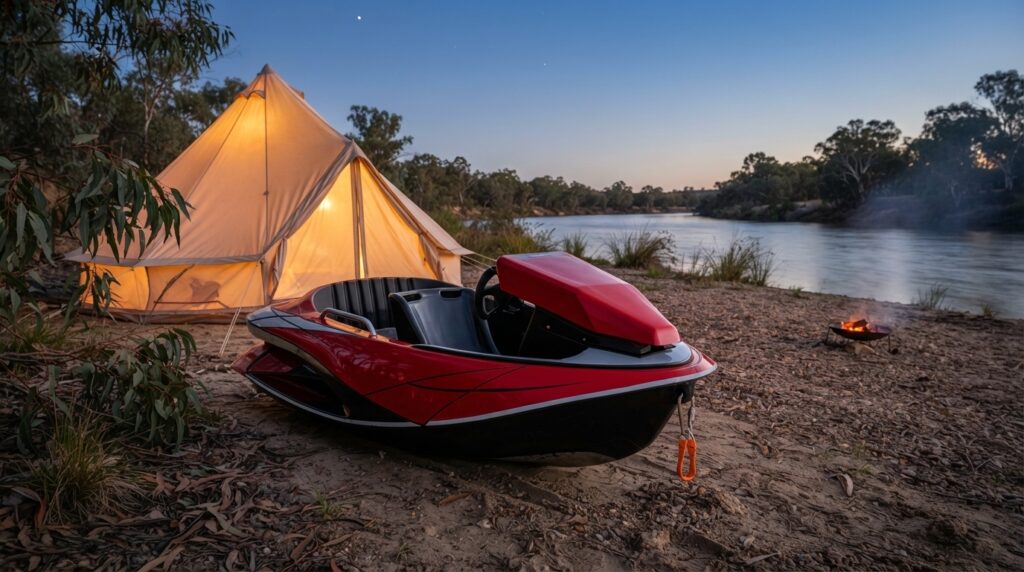
Bringing a mini jet boat along on a camping holiday adds a genuinely worthwhile dimension to a trip, but it also adds a layer of planning that a boat-free camping trip doesn't require. This guide works through the practical steps involved, from before departure through to each day on the road, to help make sure the boat enhances the trip rather than becoming a source of unexpected hassle.
Start with the fundamentals of the towing combination itself. Confirm the tow vehicle's rated towing capacity comfortably covers the combined weight of the caravan or camper plus the boat and trailer, with reasonable margin rather than sitting right at the limit. As discussed in the article on why mini jet boats appeal to travelling lifestyles, their comparatively light weight is a genuine advantage here, but it's still essential to check actual combined figures rather than assuming a "small boat" is automatically within capacity.
Check trailer registration, tyre condition, wiring and light functionality specifically before a longer trip, since a boat trailer that's seen infrequent use between trips is more likely to have developed an issue than one used regularly. A pre-trip check is a small effort that avoids a potentially trip-disrupting problem discovered at the worst possible time.
Not every planned camping stop will offer genuinely suitable water for a mini jet boat. Before finalising a route, it's worth checking each planned destination specifically for:
Building this research into route planning, rather than discovering on arrival that a chosen destination doesn't offer suitable water access, makes a meaningful difference to how much the boat actually gets used during the trip.
As covered in the companion article on caravan and camping appeal, many caravan parks and camping grounds provide powered sites, which typically offer a straightforward charging opportunity for the boat's battery. Before departure, it's worth:
Beyond the boat and trailer themselves, a few boat-specific items are easy to overlook when packing for a combined camping and boating trip:
Once on the road, a simple daily routine helps make sure the boat gets used without disrupting the rest of the trip:
A longer camping trip covering multiple destinations is likely to encounter genuinely different water conditions from stop to stop — a sheltered river at one campsite, a more open bay at the next. As discussed in the article on water conditions and energy consumption, it's worth reassessing range and safety expectations fresh at each new location rather than assuming the previous stop's conditions and boat behaviour will simply carry over.
Not every planned boating opportunity on a longer trip will pan out exactly as hoped — weather, unexpected site conditions, or simply changes in the broader trip itinerary can all affect boat use at any given stop. Building some flexibility into expectations, rather than treating every planned outing as essential, helps keep the boat a genuine enhancement to the trip rather than a source of stress if conditions or circumstances don't cooperate at every single stop.
Successfully combining a camping holiday with genuine mini jet boat use comes down to the same principle that underlies good camping trip planning generally: a bit of upfront research and preparation pays off considerably once on the road. Confirming towing capacity, researching water access at each stop, planning a sensible charging strategy, and packing the right boat-specific items all help ensure the boat becomes a genuine highlight of the trip, rather than an added complication competing with everything else a camping holiday already involves.