
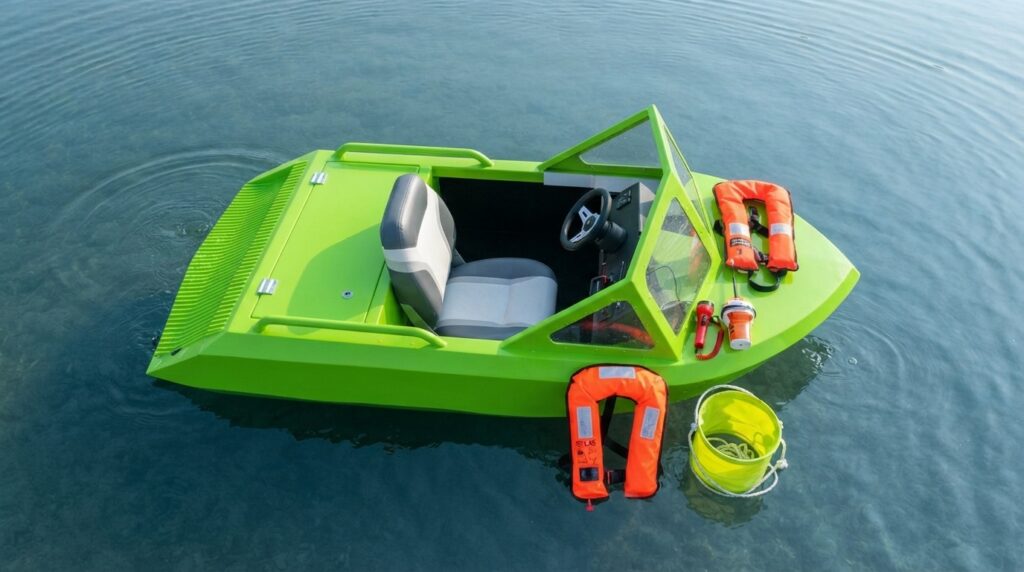
Australia doesn't have a single, uniform set of recreational boating safety rules — each state and territory maintains its own maritime authority and its own specific requirements, which means a mini jet boat owner needs to understand the rules that apply in their own jurisdiction, and be aware that those rules may differ if boating in another state. This article outlines the general patterns that apply across most of Australia, while emphasising the importance of checking your own state's specific current requirements before heading out.
National maritime safety laws in Australia apply primarily to commercial vessels, with recreational boating largely governed at the state and territory level, though broad safety principles carry across. This means each state and territory maritime authority — Transport for NSW, Marine Safety Victoria, Maritime Safety Queensland, and their equivalents elsewhere — sets its own specific requirements for recreational vessels, including mini jet boats.
Despite the state-by-state variation, a number of general patterns show up consistently across Australian recreational boating rules:
Lifejacket standards. From 1 January 2025, lifejackets used in Australian recreational boating generally need to meet Australian Standard AS 4758, with older standards such as AS 1512 no longer accepted in at least some states. This is a relatively recent change worth being specifically aware of if you have older safety equipment that hasn't been checked against current standards.
Buoyancy levels tied to water type. A common pattern across several states specifies Level 50S or higher lifejackets for smooth or enclosed waters, and Level 100 or higher for open or less protected waters. This distinction matters for mini jet boat owners specifically, since the appropriate lifejacket level can depend on whether typical outings stay within sheltered rivers and canals or extend into more open bay or coastal waters.
Mandatory wear requirements for personal watercraft and small vessels. Australian rules generally require that everyone aboard a personal watercraft wear a lifejacket at all times, and everyone aboard a recreational vessel wear one beyond a certain distance from shore, which is commonly 400 metres though this varies by state.
Age-based requirements for children. Children under 12 are commonly required to wear a lifejacket at all times aboard smaller open vessels while underway, across most Australian jurisdictions. This is directly relevant to the multi-generational family boating discussed in an earlier article — families with young children aboard a mini jet boat should expect this requirement to apply in most states.
Carrying requirements even when wearing isn't mandatory. Beyond specific mandatory-wear situations, vessels are generally required to carry an appropriate lifejacket for every person on board, stored for quick and easy access, regardless of whether wearing is required for the specific conditions at the time.
Given their compact size, mini jet boats generally fall into the category of smaller open vessels that attracts more consistently applied mandatory-wear requirements across Australian jurisdictions, rather than falling into categories with more relaxed carry-only requirements that sometimes apply to larger, more substantial vessels. This aligns with the practical safety reasoning discussed in the companion article on PFD selection — smaller vessels generally carry a higher relative risk of capsize or a person going overboard, which is reflected in how consistently strict wear requirements are applied to this category of craft.
Depending on the specific state and the waters being used, additional safety equipment requirements commonly include distress signalling equipment, an anchor and line appropriate to the vessel, a bailer or bilge pump, and in some cases specific communication equipment for vessels operating further from shore. The exact requirements, and how they scale with vessel size and distance from shore, vary meaningfully between states, which is why checking your specific state maritime authority's current equipment checklist before an outing — particularly a new or unfamiliar route — is a genuinely worthwhile habit rather than relying on general assumptions.
Boating safety regulations are periodically reviewed and updated by state maritime authorities, and the AS 4758 standard change effective from January 2025 is a recent example of exactly this kind of update. Rather than relying on general knowledge that may become outdated, the most reliable approach is checking your relevant state or territory maritime authority's website directly before each boating season, or before any trip into an unfamiliar jurisdiction, since rules genuinely do change over time and vary meaningfully between states.
Safety equipment requirements for small watercraft in Australia follow broadly similar patterns across states and territories — lifejacket standards, water-type-based buoyancy requirements, and mandatory wear rules for smaller vessels and personal watercraft — but the specific details genuinely vary by jurisdiction and are subject to periodic updates. For mini jet boat owners, given the vessel category's typically stricter, more consistently applied wear requirements, checking your own state's current, specific rules directly with the relevant maritime authority remains the only reliable way to ensure genuine compliance, rather than relying on general patterns or outdated assumptions.