
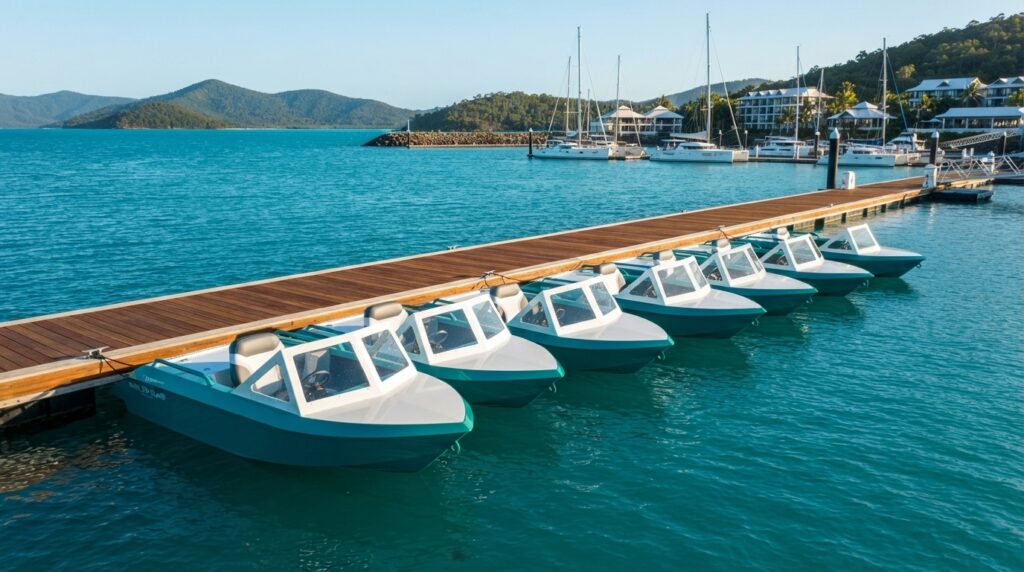
Moving from a single recreational boat to a commercial rental fleet involves a genuinely different set of considerations than private ownership — fleet sizing, charging infrastructure, maintenance scheduling, and customer-facing operational logistics all need to be worked through deliberately. This article draws together the practical considerations a prospective rental operator needs to think through before committing to building a fleet.
Fleet size is the foundational decision, and it's worth resisting the temptation to either significantly over-build (tying up capital in underutilised boats) or under-build (turning away demand during peak periods). A sensible approach involves:
For a single recreational boat, charging is a straightforward, occasional task. For a commercial fleet running multiple boats across a full operating day, charging infrastructure becomes a genuinely central operational planning challenge:
Commercial rental use represents considerably more intensive, frequent use than typical recreational ownership, and maintenance scheduling needs to reflect this reality rather than assuming recreational-use maintenance intervals will translate directly to commercial operation. As discussed in earlier articles, electric propulsion's comparative mechanical simplicity is a genuine advantage here, but commercial-intensity use still requires:
A commercial rental operation involves customers with widely varying experience levels, many of whom will have never operated this type of watercraft before. This requires:
Commercial rental operations carry meaningfully different insurance and liability considerations than private recreational ownership, given that customers with limited experience are operating the vessels independently. This is a specialised area worth working through directly with an insurer experienced in commercial marine rental operations, covering vessel damage, public liability, and the specific risk profile associated with rental customers of varying experience levels.
As touched on in the companion articles on tourism operators and licensing requirements, commercial rental operations typically involve additional regulatory obligations beyond standard recreational licensing — this may include specific commercial vessel survey requirements, operator certification, and location-specific permits for operating a rental business from a particular waterway or facility. These requirements vary by state and by the specific nature of the operation, making early, direct engagement with the relevant state maritime authority an essential early step in fleet planning, well before committing to fleet purchases or site infrastructure.
Given the varied experience levels of rental customers, most operators establish clear boundaries on where rental customers are permitted to operate — typically a defined, sheltered area within easy sight or communication range of the rental base, rather than allowing open-ended exploration. This connects to the broader safety principles discussed throughout this series, adapted specifically to a context where the operator (rather than an experienced boat owner) is responsible for assessing conditions and customer readiness on behalf of people who may have no prior boating experience at all.
Building a commercial mini jet boat rental fleet involves working through a genuinely different set of considerations than private recreational ownership — realistic fleet sizing, robust charging infrastructure planning, systematic maintenance scheduling, thorough staff training and customer briefing protocols, appropriate insurance, and early engagement with regulatory requirements specific to commercial operation. Operators who work through these considerations deliberately and early, rather than scaling up from a recreational mindset, are far better positioned to build a genuinely sustainable, safe and successful rental operation.