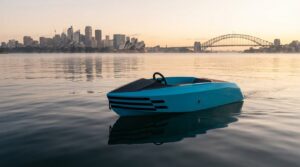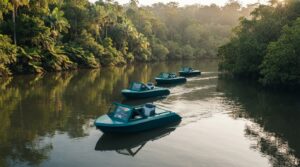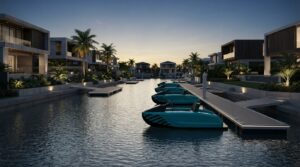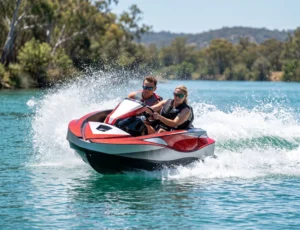
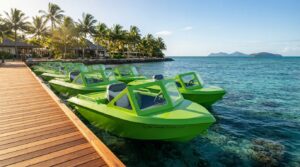
Why Resorts and Hotels Are Adding Mini Jet Boats to Guest Activity Programmes
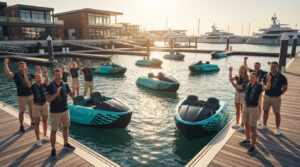
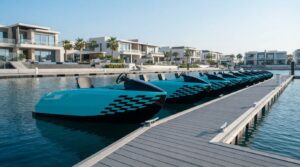
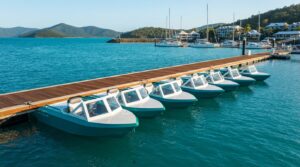
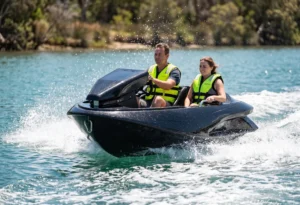
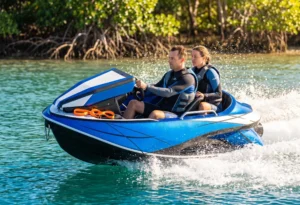
Resorts and hotels typically benefit from activity programmes that offer genuine variety across different energy levels, time commitments and guest interests.
As Australia’s specialist authority in advanced electric watercraft, Vector Watercraft is dedicated to moving the marine industry beyond outdated, unreliable petrol systems. Explore our technical insights, operational guides, and industry news to discover how engineered electric platforms are transforming both recreational and professional applications. From high-speed electric mini jet boats to critical rescue deployments, stay up to date with the innovations setting new standards on Australian waters.

Resorts and hotels typically benefit from activity programmes that offer genuine variety across different energy levels, time commitments and guest interests.

Traditional boating will remain an important part of Australian life, but the way people want to enjoy the water is changing.

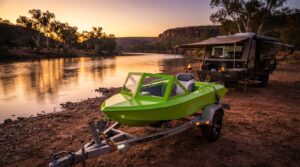
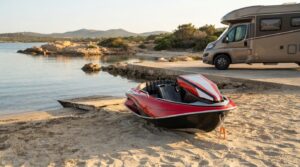
A conventional boat and trailer combination adds meaningful weight, length and towing complexity to what’s often already a fully loaded caravan or camper setup.

Riders typically describe it as a smoother, more controlled kind of power delivery: strong and continuous rather than a sudden surge followed by a plateau.

Many Australian canal and river systems, particularly residential canal estates, are relatively narrow and populated with moored vessels, pontoons and other waterfront structures.

From major coastal cities to inland rivers, lakes, dams and estuaries, recreational boating forms an important part of the Australian outdoor lifestyle.

Electric mini jet boats are increasingly being recognised by production crews as a genuinely useful tool for exactly this kind of work.

Storage, launching logistics and security all look quite different when the boat lives at the water’s edge full-time rather than being brought out for occasional outings.

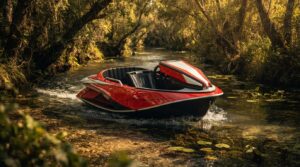
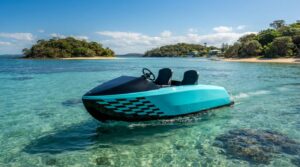
The waterway that “ends” for a typical runabout, at a certain narrowing or shallowing, often continues on quite a bit further for a genuinely compact craft.

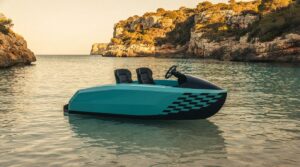
Testing or carefully reviewing seating comfort with two adults aboard, rather than assuming any “two-person” rated boat will feel equally comfortable, is a worthwhile step before purchasing.

Corporate events typically run on tightly structured schedules, with activities needing to fit within defined time blocks alongside other programme elements.

Rather than simply replacing a petrol engine with an electric motor, modern electric jet boats can change the entire ownership experience.

Australia’s guided water tour industry has traditionally been built around two ends of a spectrum — larger, high-thrill jet boats delivering adrenaline-focused harbour rides.

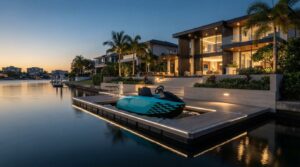
Traditional waterfront estate infrastructure — deep-water jetties, substantial pontoons rated for larger vessels — assumes residents will primarily own conventional boats.

Australian family life on the water often spans generations — grandparents introducing grandchildren to boating, parents supervising older kids taking a turn at the helm.

Building genuinely conservative utilisation assumptions into initial projections, rather than optimistic best-case scenarios, produces a more reliable basis for investment decisions.

In these specific settings, a mini jet boat can be a genuinely capable island-hopping platform, provided the limitations of its compact size and design are properly understood and respected.

Motorhomes and camper trailers have their own rated payload capacity — the total additional weight, beyond the vehicle’s own base weight, that can be safely carried.

A commercial rental operation involves customers with widely varying experience levels, many of whom will have never operated this type of watercraft before.

Fishing is one of the most common activities people picture when they imagine owning a small boat, and mini jet boats are increasingly being considered for exactly this purpose.

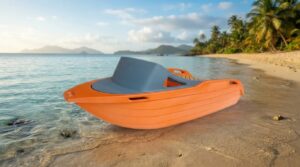
Modern HDPE Mini Jet Boats are rapidly changing the boating industry by offering dramatically improved toughness, impact resistance, and durability compared with traditional fibreglass jet

Personal Watercraft in Australia: A Category at a Turning Point For decades, the definition of a personal watercraft (PWC) in Australia has been narrow and

Introduction: A New Generation of Small Craft Propulsion Electric propulsion has quietly transformed several industries over the past decade — from bicycles and motorcycles to

Introduction: Safety Is Not About Assuming Nothing Will Go Wrong Every serious discussion about watercraft safety must begin with a simple truth: incidents happen. Weather

Cooling Systems in Electric Mini Jet Boats: Cooling Is the Hidden System That Determines Longevity In electric mini jet boats (MJBS), cooling systems rarely receive

Introduction: Fire Risk Is About Probability, Not Headlines Fire risk in personal watercraft is often discussed emotionally rather than technically. Isolated incidents involving lithium batteries

Hull Designs in Mini Jet Boats In any watercraft—large or small—the hull is the foundation. Engines, batteries, and electronics may define capability, but it is

72kW Duo Electric Mini Jet Boat vs High-Powered Jet Ski The Australian watercraft landscape is undergoing a dramatic transformation. For decades, the pursuit of performance

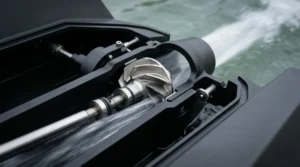
Introduction: Propulsion Is the Heart of Every Mini Jet Boat In any watercraft, propulsion determines far more than speed. It affects acceleration, efficiency, noise, safety,

Electric propulsion has quietly reshaped many transport sectors, but nowhere is the change more immediate—or more misunderstood—than on the water. In the emerging category of