
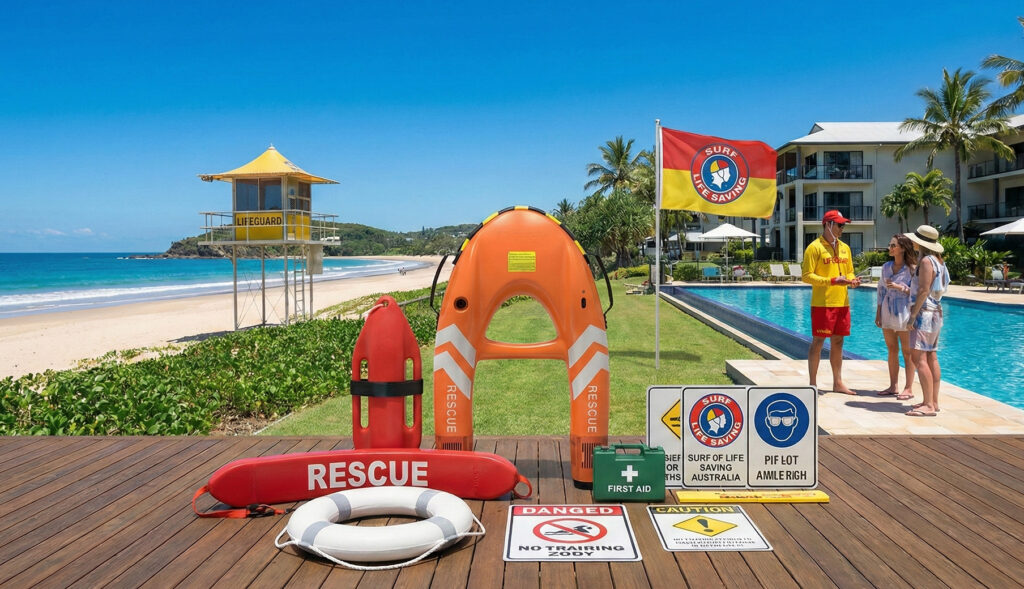
For many decades, water safety planning relied almost entirely on human response. The assumption was simple: when an incident occurs, trained people will intervene.
Modern risk management has proven this assumption incomplete.
Water emergencies are frequently:
As a result, water safety planning has shifted from reaction to preparedness, with an emphasis on first-response tools that stabilise incidents before full rescue intervention is possible.
Remote-control life rescue buoys sit squarely within this modern framework.
They are not optional embellishments.
They are preventative infrastructure — comparable to AEDs, fire extinguishers and emergency lighting.
Councils, resorts, clubs, marinas and waterfront operators share a common challenge: controlling risk across environments that are open, dynamic and often unsupervised.
Common high-risk locations include:
These locations are not inherently unsafe — but they become dangerous quickly when unexpected conditions arise.
Remote rescue buoys address this exact category of risk.
In today’s regulatory and legal environment, organisations are increasingly judged not only on how they respond to emergencies, but on whether reasonable preventative measures were in place.
The key word is reasonable.
Remote-control rescue buoys are:
In practical terms, this means the question facing decision-makers is changing from
“Why would we need one?”
to
“Why wouldn’t we have one?”
Many traditional safety standards evolved around controlled pool environments. These assumptions do not translate well to public waterways.
Public water environments involve:
In these environments, rescue time is extended and physical rescue becomes increasingly hazardous.
Remote rescue buoys offset these challenges by removing the need for immediate water entry.
Staffing lifeguards or rescue personnel at all risk locations, around the clock, is financially and logistically unrealistic.
Councils and organisations must therefore layer safety controls, not rely on a single measure.
Remote rescue buoys provide:
This layered approach aligns with established safety planning principles across many industries.
Remote rescue buoys are most effective when integrated deliberately, not treated as isolated tools.
They fit within:
They can be paired with:
Done correctly, they raise the baseline level of safety without increasing operational burden.
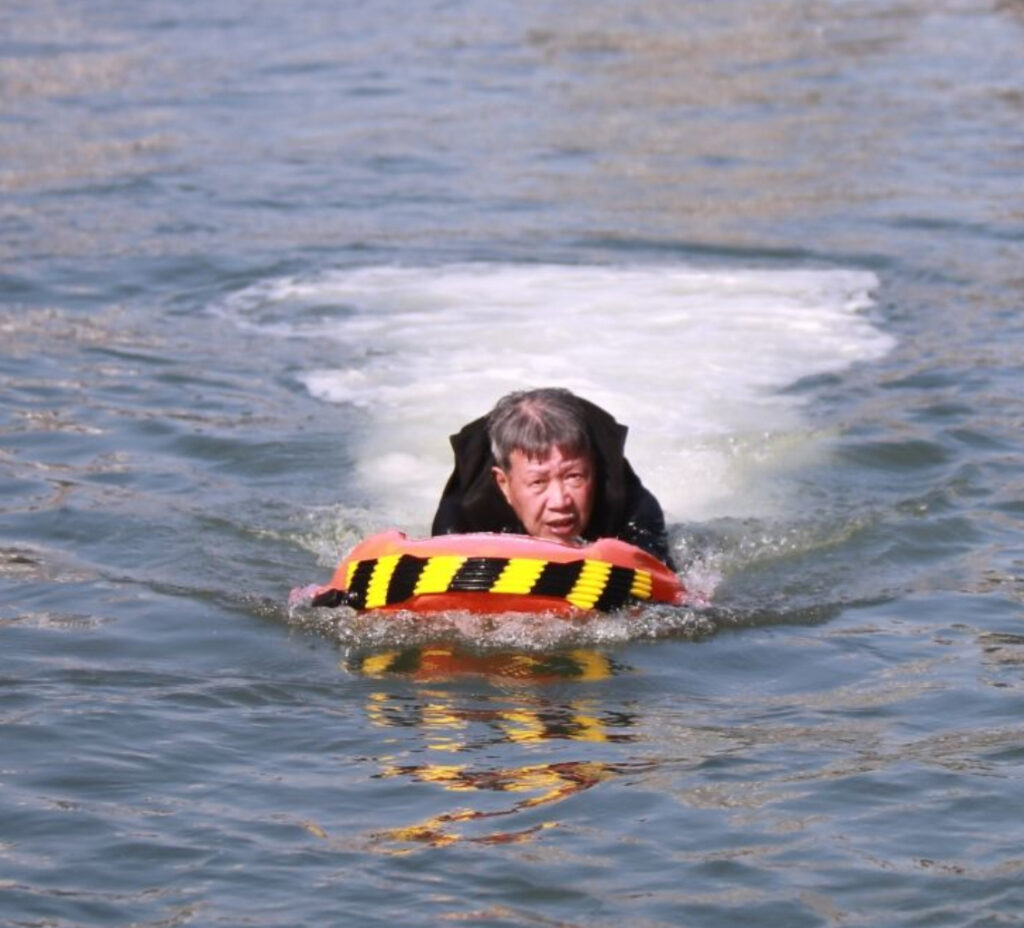
Local governments often manage dozens — sometimes hundreds — of water access points.
It is neither practical nor necessary to staff each location continuously.
What is reasonable is ensuring that effective first-response equipment is available.
Remote rescue buoys:
From a governance standpoint, this represents proportional, defensible risk control.
Resorts and waterfront accommodations occupy a unique position. Guests often assume safety because the environment “feels controlled,” even when it is not.
Night-time swimming, alcohol consumption and unfamiliar water conditions elevate risk significantly.
Remote rescue buoys provide:
Importantly, they reinforce professional service values without creating fear or intrusion.
Rowing clubs, sailing clubs, rowing schools and water sport facilities often rely heavily on volunteers and part-time supervisors.
Remote rescue buoys:
They are particularly valuable in environments where rescue competence varies.
Flood events frequently overwhelm traditional rescue capability. Swift water is unforgiving, visibility is low, and debris is common.
Remote rescue buoys allow:
As climate variability increases, flood-capable safety equipment becomes increasingly relevant.
Not all motorised rescue buoys meet the same standard. Responsible procurement should assess:
Rescue equipment should be chosen conservatively.
If a feature adds complexity without safety benefit, it should be questioned.
Remote rescue buoys do not require extensive training programs, but basic familiarisation is essential.
Best practice includes:
This reinforces public confidence and reduces hesitation during real emergencies.
A critical clarification:
Remote rescue buoys do not replace professional lifeguards or emergency responders.
They:
Professionals still perform assessment, extraction and medical care. The buoy simply buys time and safety — often the deciding factor.
Before AEDs became widespread, sudden cardiac arrest outcomes depended almost entirely on ambulance response times.
Once AEDs were placed in public environments, survival rates improved dramatically.
Remote rescue buoys follow the same logic:
History shows us this pattern works.
Beyond risk mitigation, visible safety infrastructure communicates seriousness of care.
For councils, resorts and clubs, this means:
These outcomes matter, even when incidents do not occur.
As remote rescue buoys become more common, public and regulatory expectations will evolve.
What is considered “best practice” today often becomes “minimum expectation” tomorrow.
Early adoption places organisations ahead of scrutiny, rather than under it.
Water rescue is unforgiving of delay and optimistic assumptions.
Remote-control life rescue buoys represent a pragmatic, conservative and highly effective shift in how water safety is managed.
They:
They work not because they are modern, but because they are sensible.
And in safety planning, sensible solutions tend to stand the test of time.