
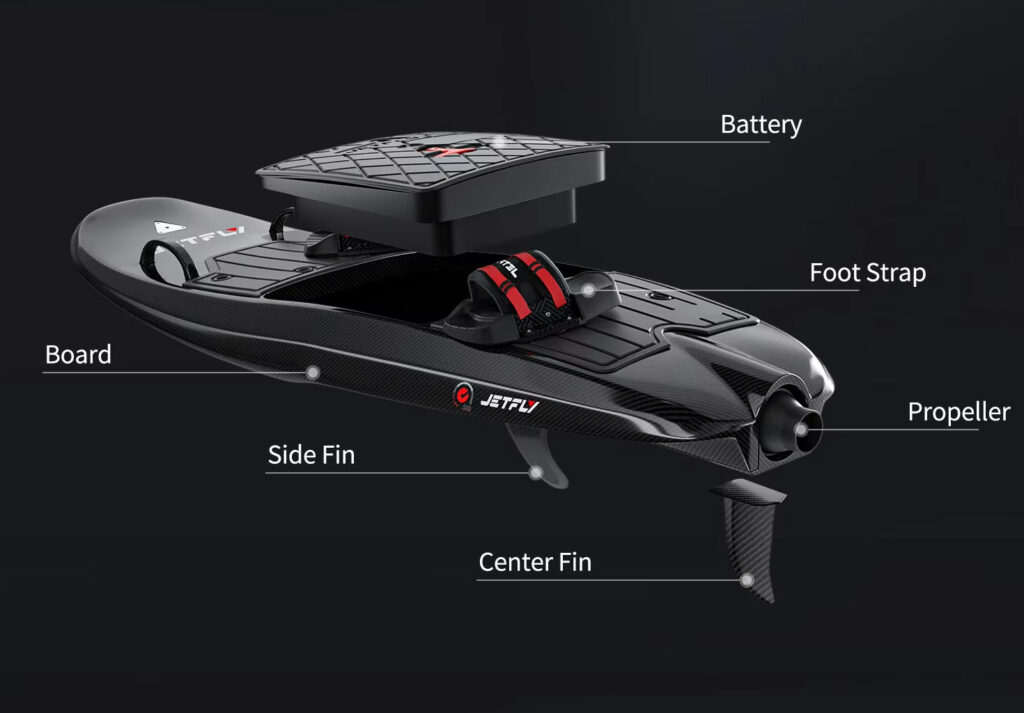
The New Reality of Electric Watercraft has shifted decisively. Electric watercraft—once considered fringe or experimental—has entered the mainstream. Mini electric jet boats, electric surf and foil boards, underwater propulsion units, and rescue craft are now used not only for recreation, but by resorts, councils, marine operators, and safety organisations.
With this progress comes an uncomfortable truth: not all electric systems are built to the same safety standard, and recent global incidents have shown exactly what happens when fire security is underestimated. At Vector Watercraft, we believe the industry is at a crossroads: follow tested European standards—or repeat costly mistakes already made elsewhere.
Across Europe, Asia, Australia, and North America, lithium battery incidents have triggered warehouse fires, shipping explosions, vessel losses, commercial building evacuations, and fatalities. These incidents are rarely caused by misuse. They are overwhelmingly linked to poor manufacturing discipline, inconsistent cells, inadequate BMS design, and untested enclosure systems.
In response, Europe moved first and moved hardest, implementing enforceable battery and motor standards that prioritise failure prevention over headline performance.
Electric watercraft amplifies risk due to high-load discharge cycles, sealed enclosures under pressure, and rapid heating under sustained thrust. Proximity to users and harsh marine environments further complicate the safety profile. European standards treat marine electric systems differently from consumer electronics, requiring:
This is why European-standard batteries and motors remain stable where lesser systems fail.
Battery failure is not always immediate. It can occur during charging, during transport, after impact, or even weeks after manufacturing due to repeated heat cycles. European testing addresses latent failure risk, not just performance at the time of sale. This distinction is critical for electric watercraft that may be stored in marinas, homes, workshops, clubs, or rescue facilities.
A safe electric system is only as strong as its weakest component. European frameworks enforce compatibility between battery discharge rates, motor insulation classes, controller thermal limits, cable specifications, and emergency shutdown behaviour. This system-level approach prevents cascading failures—a common cause of fires in poorly integrated electric products. Vector Watercraft builds its platforms around this integrated safety philosophy.
Electric watercraft is no longer just a private purchase—it is a commercial and institutional asset. Insurers increasingly ask for documentation regarding independent motor testing, battery certification, and compliance with European transport and storage regulations. Failure to answer “yes” increasingly results in higher premiums—or outright refusal of cover. European compliance is no longer a technical detail; it is a business requirement.
The market is already splitting into two tiers: certified, compliant, future-legal platforms versus cheap, uncertified, high-risk imports. As regulation tightens, the second category will quietly disappear—often leaving owners unsupported, uninsured, and exposed. Vector Watercraft has chosen the conservative path deliberately: build once, build properly, and build to the standards that will still be legal five and ten years from now.
In the past, quality meant finish and performance. Today, quality also means thermal stability, controlled failure modes, documented testing, independent verification, and regulatory alignment. European standards provide measurable proof of quality, not marketing language.
We believe electric watercraft will define the future of small marine propulsion—but only if safety remains non-negotiable. European battery and motor standards are not an obstacle to innovation. They are the foundation that makes safe innovation possible. Cutting corners in electric marine systems is not entrepreneurship—it is risk transfer to the end user. That is not acceptable.
In a world where lithium fires dominate headlines and public confidence is fragile, trust must be earned through engineering discipline, verified compliance, and conservative design choices. European electric standards represent the highest benchmark currently available. At Vector Watercraft, we choose them because safety is not a feature—it is a responsibility.