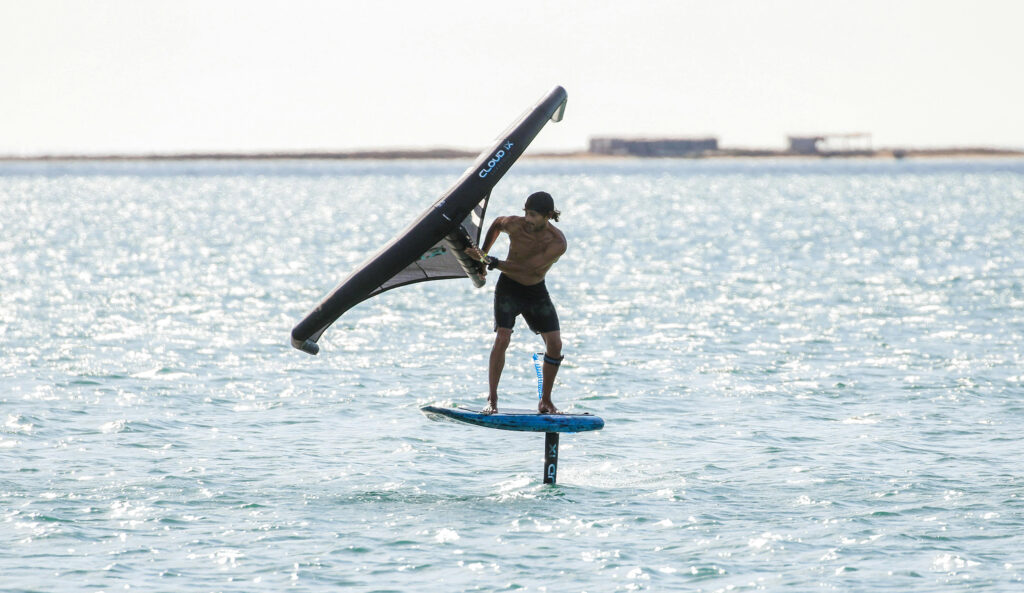
Electric foil boards (often called eFoils) look like magic the first time you see one: the board rises cleanly above the surface, spray drops away, and the rider appears to float in silence. But there’s nothing mystical about it. An eFoil is simply a well-designed balance of hydrodynamics (how water flows), aerodynamics (how the wing behaves), propulsion (how the motor delivers thrust), and control (how the rider and electronics keep it stable).
If you understand the basics of lift, drag, balance, and control, you’ll ride better, choose smarter, and avoid the common mistakes that lead to crashes, poor performance, and expensive repairs. This guide explains how eFoils lift, why they glide so efficiently, and how stability is created and maintained—without drowning you in engineering jargon.
Nearly every eFoil ride cycles through three phases:
At low speed, the board behaves like a normal board: it sits in the water and pushes water aside as it moves. This is the least efficient phase because the hull is creating a bow wave and fighting surface drag.
As speed increases, the front wing begins producing enough lift to reduce the board’s weight on the surface. The board feels lighter, the nose may rise slightly, and then it “pops” up onto the foil.
Once flying, the board’s hull is no longer dragging through the water. Now the only major resistance comes from the submerged foil (wings + mast) and the drivetrain. Efficiency and smoothness increase dramatically.
Understanding what changes between these phases—especially how lift and stability behave—explains almost everything about eFoil technique.
A foil wing creates lift because it changes water pressure as water flows over and under it. When the foil moves forward, water flows faster over parts of the wing and slower under other parts. Faster flow tends to reduce pressure, slower flow tends to increase pressure. That pressure difference creates an upward force: lift.
The simplest way to think about it is this:
The catch is that lift is not “free.” Increased lift usually increases drag, and too much angle of attack can cause the wing to stall, which feels like sudden loss of support, wobble, or a drop.
Foils work in both air and water, but water is far denser than air. That means:
This is why eFoils can get up and flying at speeds that are comfortable and controllable—when the setup is right.
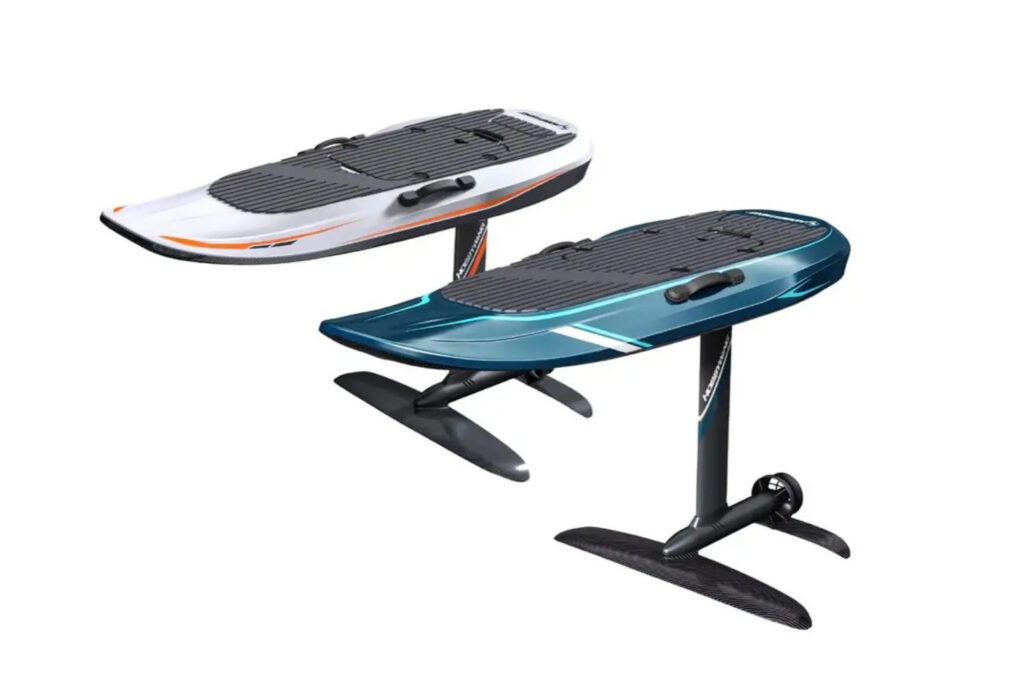
An eFoil’s “underwater aircraft” has a few key components, and each influences lift and stability.
This is the primary lift generator. Size, thickness, and shape decide how early you take off, how stable the ride feels, and how hard the wing pushes back when you shift your weight.
The stabiliser balances the pitch (nose-up / nose-down) forces created by the front wing. A well-matched stabiliser makes the board feel calm, predictable, and easier to trim.
This connects the wings and sets their distance apart. That distance affects how stable the system is in pitch. Think of it like a longer wheelbase in a car: longer can feel steadier, shorter can feel more agile.
The mast determines how high the board rides above the water and how much leverage the foil has.
A flying eFoil is a balancing act between lift and gravity. The foil wants to lift; your weight wants to drop. Stability comes from controlling the trim—the angle and level attitude of the board while flying.
When you’re trimmed properly:
A huge percentage of early wipe-outs happen because riders chase height rather than finding stable trim. The eFoil rises, they panic, they push down too hard, it drops, they accelerate, it rises again—creating a rollercoaster. The goal is calm, small corrections.
Height above the water feels exciting, but it increases risk. The higher you ride:
Most competent riders cruise at a moderate, consistent height that gives clearance for chop without getting too high. A key concept: height is controlled by lift, and lift is controlled by speed + angle of attack.
So if you want to reduce height, you can:
Smooth riders look like they’re doing very little. That’s not luck. That’s trim.
On the surface, your board is ploughing through water, creating a wave and dragging a wet hull. That’s energy hungry. Once foiling, the board hull is out of the water. Resistance is now mostly:
Because the foil has a relatively small wetted surface compared with a whole board hull, the drag drops dramatically, and the board feels like it “unlocks” efficiency. That’s the glide you see: less turbulence, less pushing water aside, more clean forward motion.
A foil stalls when the wing angle of attack becomes too steep for the water flow to stay attached to the wing surface. Instead of smooth flow, the water separates and becomes turbulent. Lift drops, drag rises, and stability falls apart.
On an eFoil, stall often feels like:
Common causes:
The fix is usually simple: ease the nose down a touch and build speed smoothly.
Stability isn’t one thing. It’s three things:
This is the most important for beginners. The foil system is constantly trying to find a stable pitch attitude. Your weight shifts, chop hits, speed changes—pitch reacts.
Roll control is about keeping the wings level. Beginners often wobble side-to-side because they’re tense and steering with their ankles rather than using relaxed, whole-body balance.
Yaw stability is managed by the underwater shape (mast and fuselage), and by rider steering inputs. Yaw is usually less of a problem than pitch or roll, but it matters in turns and cross chop.
A stable eFoil setup and good technique reduce unwanted movement in all three.
Manufacturers improve stability through several design choices:
Beginner wings are often thicker, with larger surface area, making lift easier at lower speeds.
Some wings are shaped to naturally self-level, resisting roll.
Rear wings can add pitch damping and help the foil “want” to fly at a stable angle.
A stiff mast reduces flex. Flex can feel like delayed steering and oscillations, especially at speed.
The board’s shape and internal battery placement affect how stable it feels during take-off and touchdowns.
A common misunderstanding is thinking the motor “lifts” the board. It doesn’t. The wing lifts the board. The motor provides forward thrust, creating the speed needed for the wing to generate lift.
This is why throttle control is so important:
Smooth throttle application makes learning dramatically easier.
Some systems use sensors (like gyros and accelerometers) to interpret board attitude and help manage power delivery. Even without active stabilisation, most eFoils have electronics that:
But no electronic system can replace basic technique. It can reduce harshness and make responses more predictable, yet the rider still controls balance and trim. If you rely on “technology to save you,” you’ll eventually get caught out in chop, during a turn, or when you hit ventilation.
These terms are often mixed up. They’re different problems.
Air gets sucked down from the surface onto the wing, reducing lift. This often happens if the wing gets too close to the surface, especially in chop or during aggressive turns. You feel sudden slip or drop.
This is formation of vapour bubbles due to pressure changes at high speed, which can reduce lift and increase drag. It’s more common at higher speeds or with certain prop and wing conditions.
Part of the wing comes out of the water. Once a wing breaches, lift becomes uneven and the board can drop abruptly.
The practical lesson: ride at a sensible height, avoid sudden pitch changes, and keep turns smooth.
Most early instability comes from the rider, not the equipment. Common causes:
Good riding looks calm because the rider is relaxed. The board responds to small, deliberate movements, not panic corrections.
A reliable take-off sequence often looks like this:
If you try to “jump” the board onto foil by leaning back hard, you’ll often breach, stall, or porpoise.
Turns introduce extra forces:
This is why good riders keep turns smooth, maintain enough speed, and avoid aggressive leaning until they are confident.
Australia’s conditions vary wildly—flat lakes, river chop, ocean wind swell. Stability isn’t just “beginner vs advanced”; it’s also about where you ride.
For more stability in chop and mixed conditions:
Fast setups look impressive but can be a poor match for daily riding in wind and chop.
A stable ride isn’t only mechanical. It’s also decision-making:
The best riders don’t just ride well. They ride safely and consistently.
An eFoil lifts because the wing generates lift from forward speed. It glides efficiently because the hull leaves the water and drag drops. It stays stable through a combination of smart design (wing and stabiliser tuning, mast stiffness, balanced board), sensible setup (wing size, mast height), and rider technique (trim, relaxed stance, smooth throttle).
If you focus on calm trim and consistent height—not height-chasing—you’ll progress quickly, ride longer, and enjoy the most addictive part of eFoiling: that effortless, quiet glide above the water.