
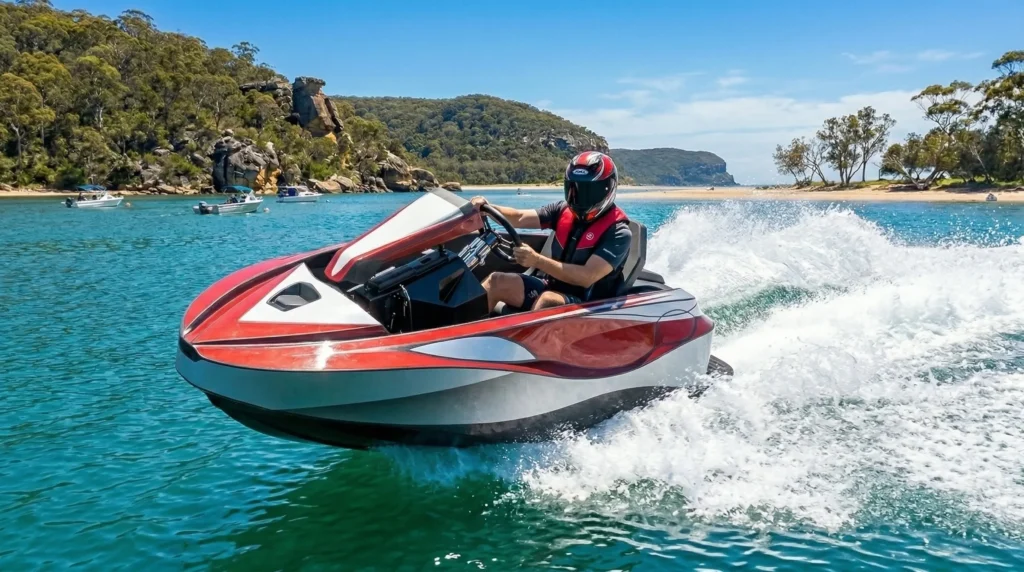
Behind the compact appearance of high-performance mini jet boats lies a sophisticated blend of marine engineering, electrical systems and hydrodynamic design. Understanding these fundamentals is essential for buyers seeking not just excitement, but durability, safety and long-term value.
While mini jet boats may look simple on the surface, quality varies enormously depending on engineering standards, component selection and design philosophy.
The hull is the foundation of performance. High-quality mini jet boats are engineered with careful attention to hydrodynamics, weight distribution and structural integrity.
Key factors include hull shape, deadrise angle, chines and strakes. These elements influence stability, planing efficiency, cornering behaviour and ride comfort. Poorly designed hulls may appear fast in calm conditions but become unstable or inefficient in chop.
Material choice also matters. Well-engineered hulls use reinforced composites or high-grade polymers that balance strength with weight. Inferior materials may flex excessively, compromising performance and longevity.
At the heart of a mini jet boat is its jet propulsion system. Unlike propeller-driven craft, jet drives draw water through an intake, accelerate it via an impeller and expel it through a nozzle to generate thrust.
Quality jet systems are precisely engineered to optimise flow efficiency while minimising cavitation. Poorly designed intakes or impellers lead to power loss, vibration and accelerated wear.
Buyers should look for robust intake grates, precision-balanced impellers and corrosion-resistant components. These details determine how the craft performs over years, not just during test rides.
Electric motors vary significantly in quality. High-performance mini jet boats use motors designed for marine environments, with sealed housings, efficient cooling and robust bearings.
Continuous power rating matters more than peak output. Marketing often highlights short-term peak power, but sustained performance under load is the true measure of engineering quality.
Torque curves should be smooth and predictable, ensuring controllable acceleration rather than abrupt surges.
The battery is the most critical and expensive component. High-quality systems use advanced lithium chemistries with integrated battery management systems (BMS).
A proper BMS monitors temperature, voltage balance and discharge rates to prevent degradation and ensure safety. Thermal management is essential, particularly in Australian conditions where ambient temperatures are high.
Buyers should be cautious of vague specifications. Transparent capacity ratings, charge cycles and safety certifications are indicators of serious engineering.
Even electric systems generate heat. Motors, controllers and batteries all require effective cooling to maintain performance and longevity.
Well-designed mini jet boats incorporate water-cooling or hybrid air-water systems to manage heat under sustained load. Poor cooling leads to thermal throttling, reduced performance and shortened component life.
Mini jet boats may be small, but they experience significant forces during operation. High-speed turns, wave impacts and rapid acceleration place stress on hulls and mounting points.
Quality engineering includes reinforced motor mounts, properly bonded hull components and load-tested structures. These features are often invisible but critical.
Throttle response, steering geometry and electronic safeguards all influence safety. Progressive throttle mapping, reliable steering linkages and emergency shut-off systems should be standard.
Advanced systems may include programmable power modes, soft-start features and fault detection — all contributing to a safer user experience.
Reputable manufacturers design to recognised international standards. Certification indicates that electrical systems, materials and construction have been independently assessed.
Buyers should view compliance not as paperwork, but as evidence of engineering discipline. It reflects a manufacturer’s commitment to long-term reliability rather than short-term sales.
Ultimately, engineering quality determines whether a mini jet boat is a joy to own or a source of frustration. Performance figures alone tell only part of the story.
Well-engineered craft deliver consistent performance, predictable handling, long service life and genuine safety. Poorly engineered alternatives may look similar but fail under real-world conditions.
For buyers willing to look beyond surface specifications, understanding the engineering fundamentals provides clarity and confidence. High-performance mini jet boats represent a remarkable fusion of modern marine and electrical engineering — but only when executed properly.