
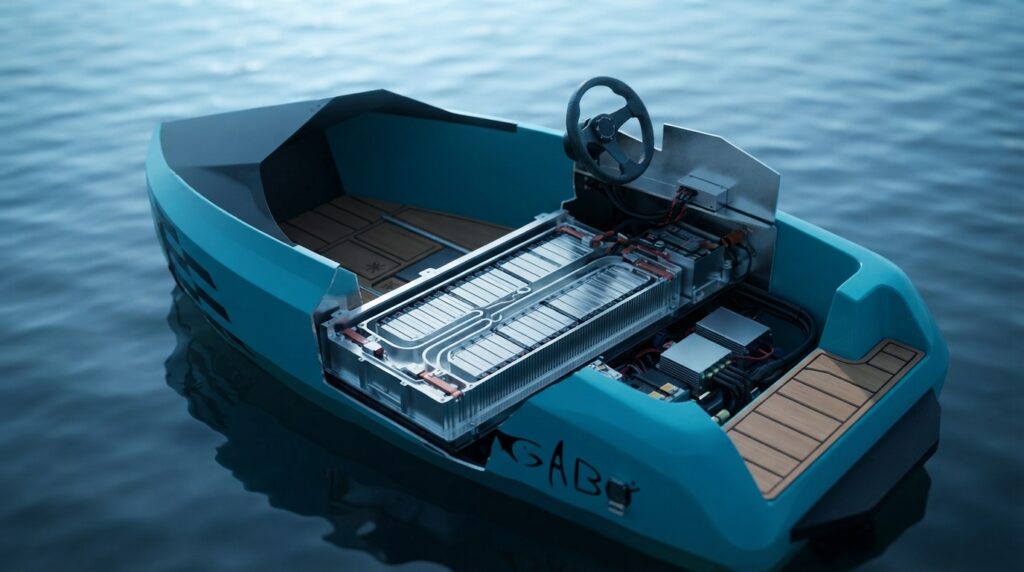
Heat is one of the least visible but most consequential factors shaping how well an electric mini jet boat's battery performs, both in the moment and across its entire operational life. While earlier companion articles in this broader series have addressed motor and controller thermal management, battery cooling specifically deserves its own dedicated attention, since the battery pack's thermal behaviour genuinely differs from the motor and controller in several important respects, and understanding it matters directly for New Zealand owners navigating the country's genuinely varied climate.
Every time a lithium battery pack is charged or discharged, some portion of the electrical energy passing through it is converted to heat rather than useful electrical work, a consequence of the internal resistance discussed in detail in the companion article on voltage sag. This heat generation increases with current draw, meaning the demanding surges associated with hard acceleration, discussed throughout this broader series, produce meaningfully more heat than the steadier, more modest current draw typical of gentle cruising.
Charging itself also generates heat, particularly at higher charging rates, a genuinely relevant consideration for New Zealand owners looking to minimise charging time between outings, since faster charging inherently produces more heat that the battery's cooling system, whatever form it takes, must manage effectively.
Sustained exposure to elevated temperatures accelerates the chemical degradation processes that gradually reduce a lithium battery's usable capacity over time, discussed in more detail in companion articles on battery health and longevity. This is not a minor, cosmetic concern — genuinely excessive heat exposure, particularly if repeated across many charge cycles, can meaningfully shorten a battery pack's useful operational life compared to the same pack managed within a genuinely optimal temperature range throughout its service life.
Beyond long-term degradation, excessive heat also has more immediate safety implications, since lithium batteries operated well outside their intended temperature range carry genuinely elevated risk of more serious thermal events, a topic the battery management system discussed in a dedicated companion article works continuously to prevent through its protective monitoring functions.
Battery cooling approaches in electric mini jet boats generally fall into two broad categories, echoing the distinction discussed in companion articles addressing motor cooling specifically. Passive cooling relies on natural heat dissipation through the battery pack's enclosure and surrounding structure, without any dedicated fan or liquid circulation system actively moving heat away. This approach is mechanically simpler and lighter, genuine advantages discussed throughout companion articles on hull weight and its performance implications, but it is inherently less capable of managing sustained, significant heat loads compared to an active system.
Active cooling incorporates a dedicated mechanism, whether air-based using a fan to actively circulate air around the battery pack, or liquid-based using a coolant circulated through channels in thermal contact with the cells, to more effectively remove heat during demanding conditions. Active systems generally manage heat considerably more effectively than passive approaches, at the cost of added weight, complexity, and in the case of liquid cooling, additional components that could potentially require maintenance or repair over the boat's operational life.
Given the genuine trade-offs discussed throughout this article, different battery cooling approaches suit different New Zealand boating patterns. Owners primarily using their boat for shorter, more moderate outings, without extended periods of hard acceleration or rapid charging, may find a passively cooled battery pack entirely adequate for their typical needs. Owners planning more demanding use, whether sustained higher-speed cruising discussed in companion articles on continuous power, frequent hard acceleration, or a preference for faster charging between outings, benefit more directly from a genuinely well-designed active cooling system.
New Zealand's climate spans a genuinely wide range, from the milder conditions of Northland through to considerably colder South Island winters, and battery cooling interacts with this variation in ways worth understanding. In warmer North Island summer conditions, ambient temperature itself adds to the thermal load a battery cooling system must manage, meaning a boat used hard on a genuinely hot Auckland or Bay of Islands summer day places somewhat greater demand on its cooling system than the same use would in cooler conditions.
Conversely, as discussed in companion articles addressing cold-weather charging, very cold conditions present their own distinct thermal management challenge, requiring the battery management system to manage charging carefully to avoid the lithium plating risk discussed in the companion article on battery management systems, a genuinely different concern to the excess-heat considerations this article has primarily focused on, but one that underscores how battery thermal management genuinely matters across the full range of conditions New Zealand ownership presents throughout the year.
Battery cooling does not operate in isolation from the rest of a mini jet boat's electrical system, discussed throughout companion articles on battery chemistry, battery management systems, and motor controllers. The battery management system continuously monitors pack temperature and can reduce charging or discharging rates if cooling capacity is genuinely insufficient for current conditions, a protective behaviour that connects directly to the continuous versus peak power discussion in a dedicated companion article, since a battery approaching its thermal limits may simply be unable to sustain peak power output for as long as it otherwise could under cooler conditions.
Given everything discussed throughout this article, New Zealand buyers comparing different mini jet boat models are well served by asking specifically whether the battery pack uses passive or active cooling, and if active, whether this is air or liquid-based. It is worth asking how the manufacturer describes the boat's performance during sustained hard use, particularly relevant for buyers planning the kind of demanding riding style discussed throughout companion articles on continuous power and repeated acceleration. And it is worth asking specifically how the system manages charging in genuinely hot or cold conditions, given the climate variation New Zealand ownership can present across different regions and seasons.
As with several other technical characteristics discussed throughout this broader series, battery cooling system quality varies meaningfully between manufacturers, despite every electric mini jet boat requiring some form of thermal management for its battery pack. A genuinely well-engineered cooling system, whether passive or active, matched thoughtfully to the boat's intended performance envelope and typical usage pattern, delivers a meaningfully better real-world experience than a poorly matched system, even where the underlying battery chemistry and capacity are broadly similar between two competing models.
Beyond the underlying cooling system design discussed throughout this article, New Zealand owners can support genuine battery thermal health through sensible operating habits. Avoiding unnecessarily prolonged periods at or near peak power output, discussed in the companion article on continuous versus peak power, reduces cumulative thermal stress on the battery. Allowing genuine recovery time between hard acceleration events, discussed in companion articles on continuous cruising versus repeated acceleration, supports better heat dissipation than closely spaced, repeated demanding bursts. And avoiding charging immediately after a particularly demanding outing, allowing the battery some time to cool naturally before beginning the charging process, can genuinely reduce combined thermal stress compared to charging a battery that is already running warm from recent hard use.
For New Zealand owners without an extensive engineering background, it can help to think of battery cooling in terms of a familiar comparison: how a laptop computer manages heat during demanding tasks. A laptop performing light, everyday tasks generates relatively little heat and can often be cooled passively, through simple heat dissipation into the surrounding air. The same laptop running a genuinely demanding task, such as video editing or gaming, generates considerably more heat and typically relies on active cooling, fans actively drawing heat away, to maintain safe operating temperatures and sustained performance.
A mini jet boat's battery pack faces a genuinely similar relationship between demand and cooling requirement. Gentle, moderate use generates comparatively modest heat, manageable through simpler, passive approaches. Sustained hard use, whether frequent acceleration or extended high-speed cruising, generates considerably more heat, benefiting from the more capable active cooling approaches discussed throughout this article. This comparison, while imperfect in its technical detail, helps New Zealand buyers intuitively grasp why cooling system sophistication genuinely matters more for some intended usage patterns than others.
Active cooling systems, whether air or liquid-based, introduce additional components worth understanding from a maintenance perspective, connecting to the broader maintenance themes discussed throughout companion articles on this site. Air-based active cooling typically involves a fan and associated ducting, worth including in the kind of periodic inspection habits discussed in companion articles on pre-launch checks, since accumulated dust or debris can gradually reduce cooling effectiveness over time. Liquid-based active cooling introduces genuinely more mechanical complexity, including a pump, coolant, and sealed channels, each representing a potential point requiring occasional professional inspection or maintenance over the boat's operational life.
New Zealand owners considering a boat with active liquid cooling specifically are well served by asking directly about recommended maintenance intervals for this system, and understanding what a coolant replacement or system service might genuinely involve, both in terms of cost and the still-developing local service network discussed throughout companion articles addressing purchase considerations.
As discussed throughout companion articles on hull weight and power-to-weight ratio, every additional component a manufacturer adds to a mini jet boat carries a genuine weight cost, and battery cooling systems are no exception. Active cooling components, particularly liquid-based systems with their pump, coolant and plumbing, add meaningful weight compared to a passively cooled equivalent, a trade-off worth weighing against the genuine performance and longevity benefits more effective cooling provides.
This connects directly to the broader theme running throughout this series regarding informed trade-off evaluation — a more sophisticated, heavier active cooling system may deliver superior sustained performance and longer battery life, but this comes at some cost to the lighter weight and correspondingly improved acceleration and range that a simpler, passively cooled system might otherwise support. Neither approach is objectively superior, and the right choice genuinely depends on how a specific New Zealand buyer intends to use their boat.
Given the regional climate and typical usage variation discussed throughout this broader series, it is worth New Zealand buyers considering how their own circumstances might shape the relative importance of battery cooling sophistication. Owners in warmer northern regions, particularly Northland and the wider Auckland area, who plan genuinely demanding summer use, benefit more directly from robust active cooling given the combined thermal load of hot ambient conditions and hard riding. Owners on South Island lakes who favour steadier, more moderate cruising, discussed throughout companion articles on riding styles, may find a simpler passive system entirely adequate, particularly given the generally cooler ambient conditions much of the South Island experiences compared to the north.
Owners planning to use their boat commercially, whether for the tourism or rental fleet applications discussed in companion articles elsewhere in this broader project, face genuinely different considerations again, since commercial-intensity use typically involves considerably more sustained, repeated demanding operation than typical recreational use, making robust active cooling a considerably more important consideration for this kind of application regardless of typical regional climate.
Armed with the understanding built throughout this article, New Zealand buyers can approach test rides with a specific, additional dimension of attention beyond the acceleration and handling characteristics discussed throughout other companion articles in this series. Asking a dealer specifically how a boat performs during a sustained period of hard use, rather than only a brief demonstration burst, and paying attention to whether performance noticeably tapers during this kind of extended demanding test, offers genuinely useful insight into how effectively that specific model's battery cooling system manages real-world thermal demand.
This kind of extended, deliberately demanding test is not always practical or available during a typical dealer demonstration, but where possible, it offers considerably more useful information about genuine battery cooling capability than a brief, favourable-conditions test ride alone can provide.
Battery cooling rarely receives the marketing attention afforded to headline figures like motor power, top speed, or advertised range, yet as this article has aimed to demonstrate, it genuinely shapes how consistently a mini jet boat performs during demanding use and how gracefully its battery retains capacity across many years of ownership. For New Zealand buyers and owners committed to making a genuinely informed purchasing decision, and to getting the most out of their boat across every season and every style of use, understanding battery cooling deserves a place alongside the more commonly discussed specifications that typically dominate purchasing conversations throughout this broader category.
It is worth understanding, from a manufacturer's perspective, why not every mini jet boat incorporates the most sophisticated active cooling approach available, even though such systems generally offer superior thermal management. Active liquid cooling systems add genuine manufacturing cost, complexity, and weight, and for a manufacturer targeting a more accessible price point or a lighter, more nimble handling character, a well-engineered passive or simpler active air-cooled system may represent a more sensible overall design choice, provided it is genuinely well matched to the boat's intended performance envelope and typical usage pattern.
This reinforces a theme that has run throughout this broader series: no single cooling approach is universally correct, and the right choice for a specific model depends on the manufacturer's broader design priorities and intended market position, echoing similar trade-off discussions throughout companion articles on impeller pitch, hull shape, and battery chemistry.
This article completes a natural pairing with companion articles addressing motor and controller thermal management, together giving New Zealand owners and buyers a genuinely complete picture of how heat is managed throughout an electric mini jet boat's entire electrical system. Motor cooling, controller cooling, and battery cooling each address a genuinely distinct component, yet all three work toward the same underlying goal discussed throughout this broader series: protecting the electrical system from damage while supporting the most consistent, sustained performance the underlying hardware genuinely allows.
Understanding all three pieces together, rather than any single one in isolation, equips New Zealand buyers to ask genuinely well-rounded questions when comparing different models, and equips existing owners to interpret their boat's behaviour during demanding conditions with genuine insight rather than uninformed guesswork about why performance might be tapering during an extended, hard-ridden outing.
Developing genuine thermal awareness, understanding that heat management touches nearly every electrical component discussed throughout this broader series, ultimately supports more confident, informed mini jet boat ownership. A New Zealand owner who understands why performance might taper during a particularly hot, demanding summer outing, or why charging might proceed more cautiously on a cold South Island winter morning, approaches these situations with realistic expectations rather than uninformed concern, recognising protective, sensible engineering behaviour for what it genuinely is rather than mistaking it for a fault.
Bringing this discussion to a close, it is worth reinforcing why battery cooling genuinely belongs alongside range and motor power as a meaningful point of comparison when evaluating mini jet boats, rather than being treated as a purely technical footnote. A boat's advertised range and motor power figures represent its capability under favourable, typically brief testing conditions, discussed throughout companion articles addressing advertised versus real-world performance. A boat's genuine battery cooling capability determines how consistently that capability can actually be sustained across a genuine, extended outing involving hard use, warmer conditions, or both simultaneously — precisely the scenario many New Zealand owners genuinely encounter during a full day exploring the Marlborough Sounds or pushing hard across the Hauraki Gulf on a warm summer weekend.
Understanding this distinction helps New Zealand buyers interpret headline specifications with appropriate context, recognising that a boat's genuine, sustained real-world performance depends as much on how effectively it manages heat as on its underlying motor power or battery capacity figures alone.
Battery cooling represents a genuinely important, if often overlooked, aspect of an electric mini jet boat's overall thermal management picture, working alongside motor and controller cooling to protect long-term battery health and support consistent performance during demanding use. For New Zealand owners and buyers, understanding the trade-offs between passive and active cooling approaches, and how these interact with the country's genuinely varied climate and typical usage patterns, provides a genuinely useful additional lens for comparing different models and setting realistic expectations for sustained performance and long-term battery health across every season of ownership ahead. This kind of genuinely informed comparison, weighing thermal management alongside the more commonly discussed headline figures, is precisely what separates a well-informed New Zealand buyer from one relying purely on brochure specifications that describe only a boat's best-case, momentary capability rather than its genuine, sustained performance across the full range of conditions a real ownership life will present. It is a small but genuinely worthwhile piece of due diligence, well worth the extra few questions it takes to uncover before committing to a purchase. New Zealand owners and buyers who take this understanding forward, applying it consistently across every future comparison and purchasing decision, are simply better equipped to select a boat that will genuinely perform the way they need it to, across every season and every demanding outing still to come. That is, in the end, the genuine value this article has aimed to deliver.