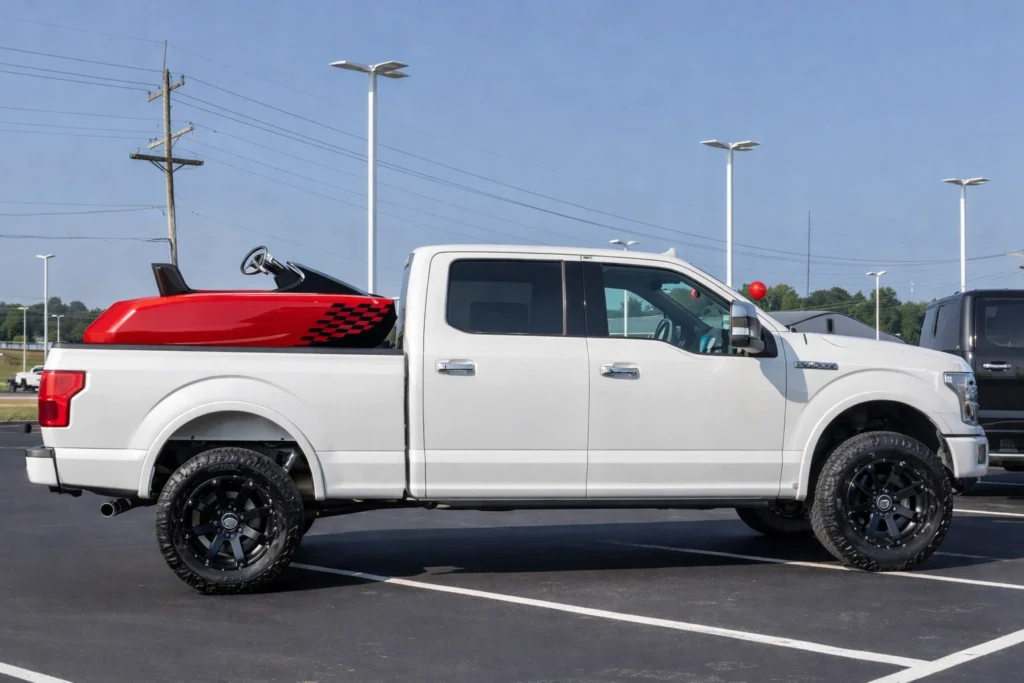
For decades, boating in Australia has been sold as a “trailer lifestyle”: towbar, reversing skills, rego for the trailer, a place to store it, and the ongoing hassle that comes with anything on wheels. That tradition suits bigger hulls, but it’s not automatically the best—or even the most sensible—path for the newer class of mini jet boats and compact electric jet craft.
A properly chosen mini jet boat can deliver genuine fun on the water without you owning a trailer at all. In fact, for a large slice of buyers—especially those who want convenience, low fuss, and quick “grab-and-go” sessions—going trailer-free is one of the main advantages.
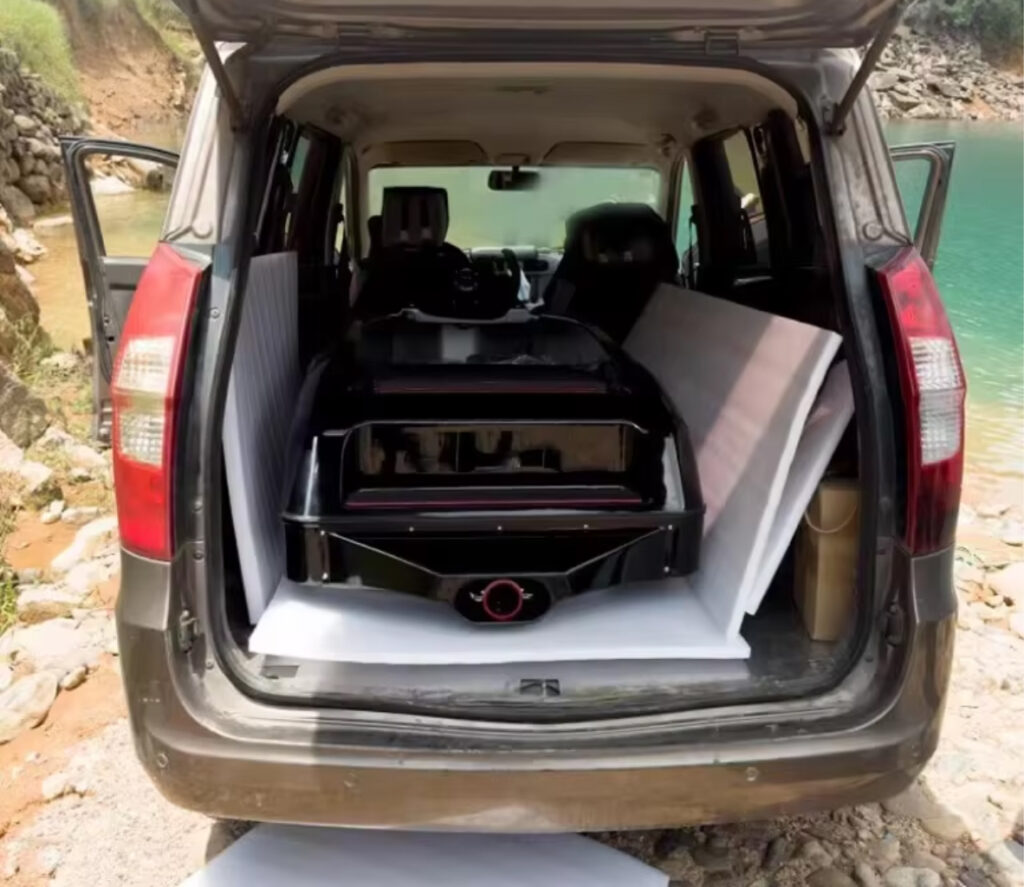
This report explains why trailer-free ownership is realistic, what makes it possible, and the best loading systems and workflows that let people load a mini jet boat onto a ute or into/on a medium to large SUV, safely and sensibly. I’ll also cover the practical limits—because doing it properly matters.
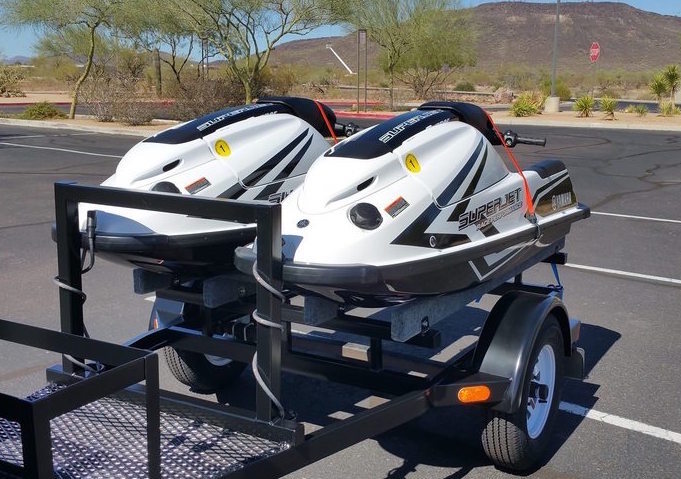
Traditional trailer boats usually require a trailer because of three things:
Mini jet boats—particularly compact electric jet craft—change those assumptions because many are:
In plain terms: once the craft fits the vehicle footprint and the weight can be managed safely, the trailer becomes optional.
Trailer-free ownership isn’t just about saving money. It’s about removing friction so you actually use the craft more often.
When you own a trailer you often add:
Removing the trailer removes a whole category of upkeep. It also reduces the number of things that can fail at the wrong time.
A trailer takes up permanent floor space. A mini craft stored on a trolley/dolly, stand, or wall cradle can be far easier to manage—particularly if you’re storing it in a garage, side access area, or under cover.
This is the part most people underestimate. A trailer can turn a 45-minute idea into a 2-hour exercise. Trailer-free setups make casual sessions realistic:
Trailer ramps bring pressure: reversing, waiting, limited parking, salty spray, people watching, tight turning circles. Trailer-free setups often let you use alternate access points, depending on local rules and safety conditions.
Not every small craft is trailer-free friendly. The difference is not marketing—it’s physics and practicality.
A mini jet boat becomes realistically trailer-optional when it has:
If the craft is too long, too awkward, too fragile, or too heavy as a single unit, you can still go trailer-free—but you’ll need more specialised loading gear and you must be realistic about your physical limits.
There are several proven approaches. The right one depends on your craft weight, your vehicle height, and whether you’ll usually have help.
Below are the most practical trailer-free loading systems I’d recommend considering.
Best for: many mini jet boats when you have a reliable second person
If the craft is within a manageable weight range, a two-person lift can be safe and simple—provided you’re disciplined with technique.
A sensible workflow is:
This method is “old-school practical”: no gadgets needed, just correct handling.
Key safety points that matter:
Two-person lifting is best when it’s done the same way every time and doesn’t become a macho contest. Done properly, it’s safe. Done casually, it’s a back injury waiting to happen.
Best for: utes, especially when you want a one-person-friendly method
This is one of the most useful “real world” methods because it reduces the need to dead-lift the full craft.
How it works:
You can improve the system with:
This method is a classic approach used by tradies with heavy gear and by boat owners with small tinnies and kayaks. It’s not fancy, but it works.
Best for: heavier craft where sliding still feels too awkward
This method uses two lightweight ramps (often aluminium) that hook onto the tailgate edge or tray.
The basic idea:
This turns “lift and hope” into “roll and control.”
If you want to keep things traditional and mechanical (and reliable), ramps are hard to beat. The main requirement is choosing ramps rated for the actual load and using proper ramp angles so you don’t create a runaway situation.
Best for: solo owners with a heavier mini craft, especially older buyers who don’t want strain
A basic hand winch (or small 12V winch) can be mounted on a removable bracket near the front of the tray.
Workflow:
This method is extremely controlled and reduces injury risk. It does require a tidy installation and a clear understanding of anchor points, but it is one of the most sensible solo-loading solutions when weight is borderline.
Best for: some craft sizes, and owners who prefer keeping the ute tray free (or SUV owners)
Roof loading is possible, but it needs respect. Roof height and overhead lifting are the main risks.
If roof transport is the goal, the practical way is not “dead lift overhead.” The practical way is a rear loading system that uses:
The classic, reliable approach is:
This is commonly used for large kayaks and can be adapted to compact personal watercraft if the craft shape and weight are suitable.
Practical warning: roof loading is where people hurt shoulders and backs. If the craft is heavy or awkward, use tray loading or a dedicated lift aid instead.
Best for: certain small craft and certain vehicles, with strict attention to legal load limits
A hitch platform can work for some equipment, but you must be careful with:
For a mini jet boat, this can be an option only in specific cases. If the craft is short and the platform is engineered correctly, it can reduce lifting height. But this is not the first method I recommend unless you’re confident in the setup and legal requirements.
Best for: people launching from suitable access points, not necessarily formal ramps
A beach trolley is one of the most underrated pieces of equipment in trailer-free boating.
A good trolley allows:
It also pairs perfectly with ramps or sliding tray systems.
If your local access is firm sand, grass near a bank, or a non-ramp shoreline with safe entry, the trolley becomes your “mini trailer”—without rego, tyres, lights, and corrosion.
SUVs can be trailer-free platforms as well, but they require more planning due to:
The most common workable SUV method is roof transport with proper loading aids. If you want to do it often and safely, you want a system that reduces overhead lift and allows you to “push and roll,” not “lift and balance.”
One of the biggest reasons mini electric jet craft can be trailer-free is simple: you can split the load.
Instead of one 80 – 90 kg lump, you may have:
This is a quiet revolution in practical ownership. It’s the same reason e-bikes and modular camping setups have exploded: people can handle them.
From a safety standpoint, it’s far better to make three controlled trips than one risky lift.
Trailer-free can be brilliantly convenient, but only if you treat safety and legality properly. Here are the non-negotiables.
In Australia, load restraint rules are taken seriously, and for good reason. You must ensure the craft is:
Use quality ratchet straps, edge protectors, and non-slip mats. “She’ll be right” isn’t acceptable at highway speed.
Always respect:
If you’re not sure, assume the limit is lower than you think until verified.
If the craft requires a risky lift, change the method. Use:
Trailer-free ownership is meant to reduce hassle—not replace it with a strained back and regret.
Here are common combinations that are practical and repeatable.
This is one of the simplest and most reliable trailer-free systems.
This is ideal for heavier craft or solo owners.
This works best when the craft is not overly heavy.
People often assume “no trailer” means “impossible to launch properly.” Not true. It just means your launch is more like launching a kayak or small tender.
A practical routine is:
Where you launch matters. You must choose locations that are:
Trailer-free is about choosing the right access points and using a repeatable routine.
Trailer-free mini jet boat ownership is ideal for:
It’s particularly appealing if you’re running a compact electric craft and you want the ownership experience to feel more like handling premium sporting equipment than managing a boat-and-trailer rig.
The common mistakes are predictable:
The fix is also predictable:
A trailer used to be the price of entry into boating. Mini jet boats—especially compact modern designs—have changed that.
If the craft is the right size, with sensible component weights, and you use proven loading aids like tailgate slides, ramps, rollers, trolleys, and winch-assisted tray loading, you can absolutely own and use a mini jet boat without a trailer. You’ll save money, reduce upkeep, simplify storage, and most importantly, you’ll use the craft more often because it’s easier.
Trailer-free is not a gimmick. It’s simply a smarter match between modern compact craft and the way Australians actually want to use them: quick, practical, and enjoyable—without turning every outing into a ramp-and-trailer production.