

Foil boards appear deceptively simple from the surface. A board, a mast, a wing and a motor. Yet beneath that minimal outline lies one of the most sensitive balance systems in modern water sports. Among all the engineering decisions that shape how a foil board behaves, none has a greater influence on ride feel, stability, fatigue, and rider confidence than battery placement.
Battery location is not a cosmetic or convenience decision. It determines centre of gravity, pitch behaviour, roll recovery, yaw stability, acceleration smoothness, and how forgiving the board feels when mistakes occur. Riders often attribute a “twitchy”, “locked-in”, or “floaty” sensation to skill level or wing design, when in reality much of what they feel originates from where several kilograms of battery mass sit in relation to the foil mast and rider stance.
This article explains battery placement from first principles, translating engineering realities into practical riding consequences. It draws on real-world riding behaviour, hydrodynamics, and long-term rider experience rather than marketing claims.
Every foil board operates around a centre of gravity formed by the combined mass of rider, battery, board, motor, mast and wings. Unlike traditional boards that skim the surface, foil boards fly, meaning even small shifts in centre of gravity have amplified consequences.
A battery positioned too far forward pulls the centre of gravity toward the nose, increasing pitch sensitivity during take-off and making the board reluctant to lift smoothly. Too far aft, and the board may rise aggressively, over-foil, or feel unstable during speed changes.
The most stable configurations place the battery close to the mast base and vertically low, aligning mass with the lift point of the foil. This alignment reduces leverage effects and allows the board to pivot naturally rather than fight physics.
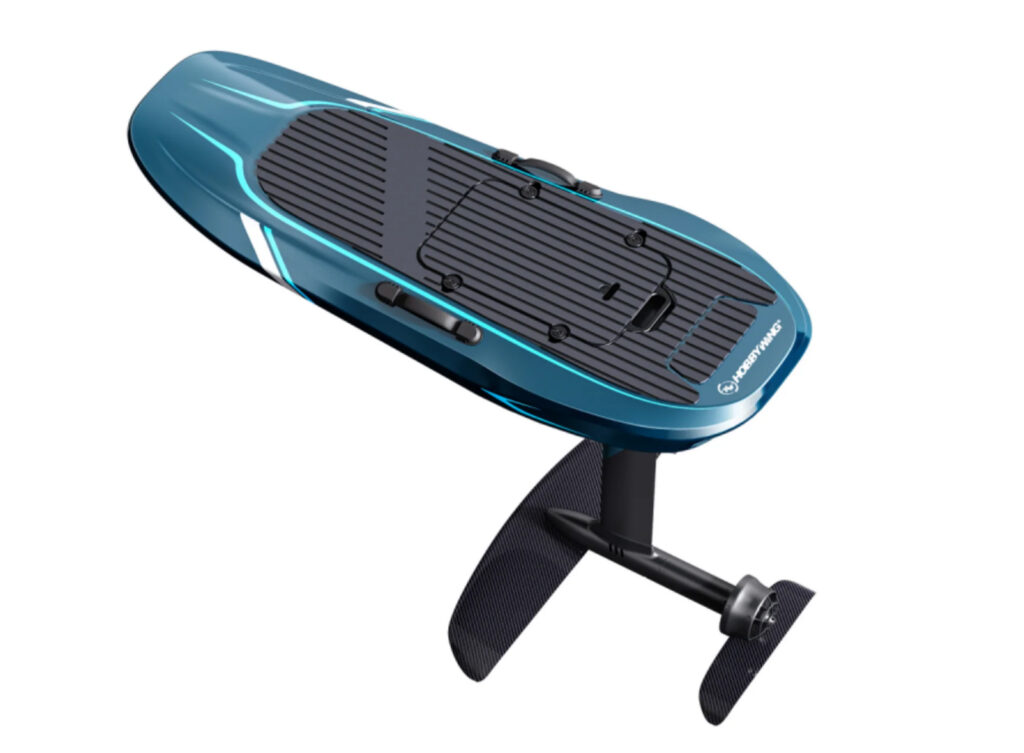
Battery height inside the board is just as critical as fore-aft location. A high-mounted battery raises the vertical centre of gravity, increasing roll instability. This manifests as side-to-side wobble, delayed correction, and rider fatigue as micro-adjustments become constant.
Lower battery placement improves roll damping. The board feels calmer, especially at low speeds where foils are most sensitive. Riders often describe this as a “settled” or “planted” feel, even in choppy conditions.
From an engineering perspective, lowering mass reduces rotational inertia. From a rider’s perspective, it reduces anxiety.
Pitch is the axis most riders struggle with initially. Battery placement heavily influences this learning curve.
When battery mass is too far from the mast, every throttle input magnifies pitch movement. Riders experience sudden lift, porpoising, or uncontrolled rises that feel like mistakes but are actually mechanical consequences.
Balanced battery placement produces a progressive take-off curve. Lift builds smoothly. Corrections are intuitive. Riders can feel the foil engaging rather than being surprised by it.
This distinction matters not just for beginners. Advanced riders rely on predictable pitch to carve, pump, and manage speed transitions without cognitive overload.
Electric foil boards do not behave like petrol craft. Torque delivery is immediate. Battery placement influences how that torque translates into motion.
A poorly positioned battery exaggerates acceleration forces, creating a jerky or digital throttle feel. Well-positioned mass absorbs and smooths those forces, allowing fine throttle modulation.
This is particularly noticeable during slow cruising, docking manoeuvres, and low-speed turns where finesse matters more than raw power.
Riders often underestimate how much battery placement affects fatigue. Boards with unstable centres of gravity demand constant micro-corrections through ankles, knees, hips and core.
Over long sessions, this leads to premature fatigue, loss of form, and increased fall risk. Well-balanced boards feel lighter than they are because the rider works less to maintain equilibrium.
This is one of the reasons experienced riders gravitate toward designs that prioritise mass centralisation rather than maximum battery size at any cost.
Carving on a foil board is an interplay between roll and yaw. Battery placement influences how willingly the board initiates turns and how cleanly it exits them.
Forward-biased batteries resist turning and require greater rider input. Rear-biased setups can feel loose and overly reactive. Centralised mass supports neutral turning, where the foil does the work and the rider guides rather than forces the arc.
This distinction separates boards that feel playful from those that feel demanding.
Open water conditions expose battery placement weaknesses quickly. Chop introduces vertical accelerations that amplify pitch instability, while cross-wash challenges roll recovery.
Lower, central battery placement dampens these inputs. The board tracks cleanly and resists sudden attitude changes, allowing the rider to focus outward rather than constantly reacting.
Battery placement also affects structural design. Boards that concentrate heavy batteries near stress points reduce long-term fatigue on the shell and internal supports.
Centralised placement minimises bending moments, improving durability and reducing the likelihood of micro-cracking over years of use.
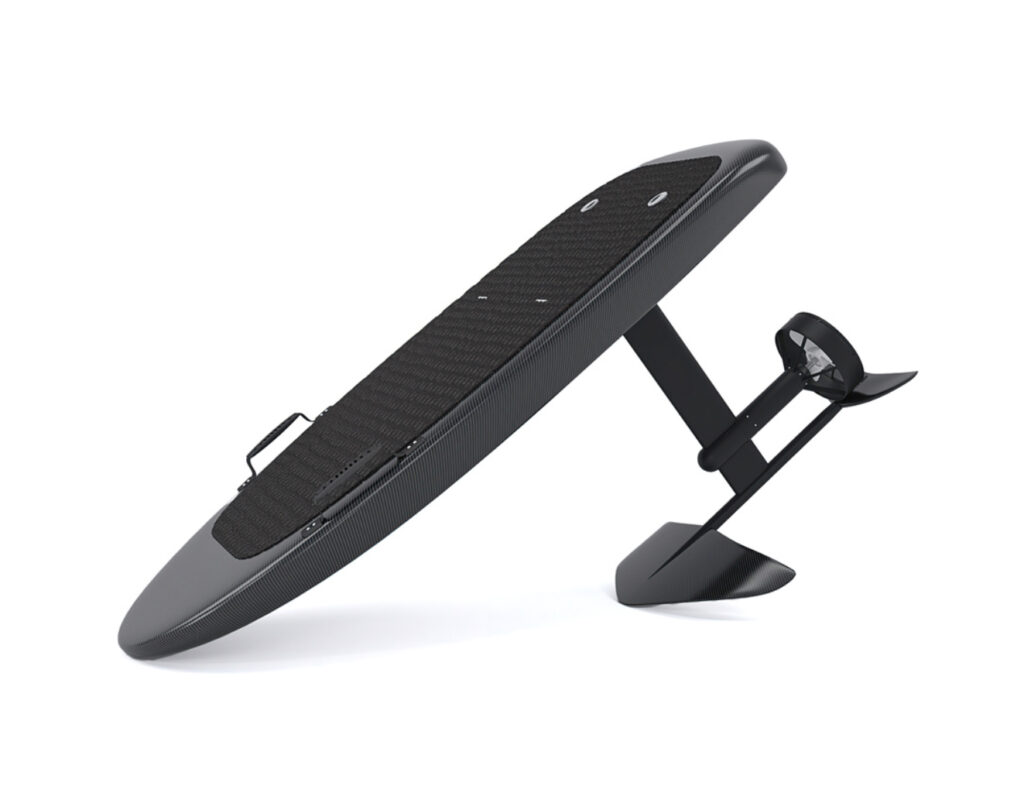
Manufacturers often advertise battery capacity, range, and charge time while ignoring placement entirely. Yet two boards with identical batteries can ride completely differently depending on how that mass is integrated.
Serious buyers should look beyond watt-hours and ask where the weight sits relative to the mast, rider stance, and foil geometry.
Battery placement is not a secondary consideration. It is the silent architect of ride quality, confidence, and long-term enjoyment.
A well-balanced foil board feels intuitive. A poorly balanced one feels like it is constantly arguing with the rider. The difference is not subtle, and once experienced, it cannot be unlearned.