
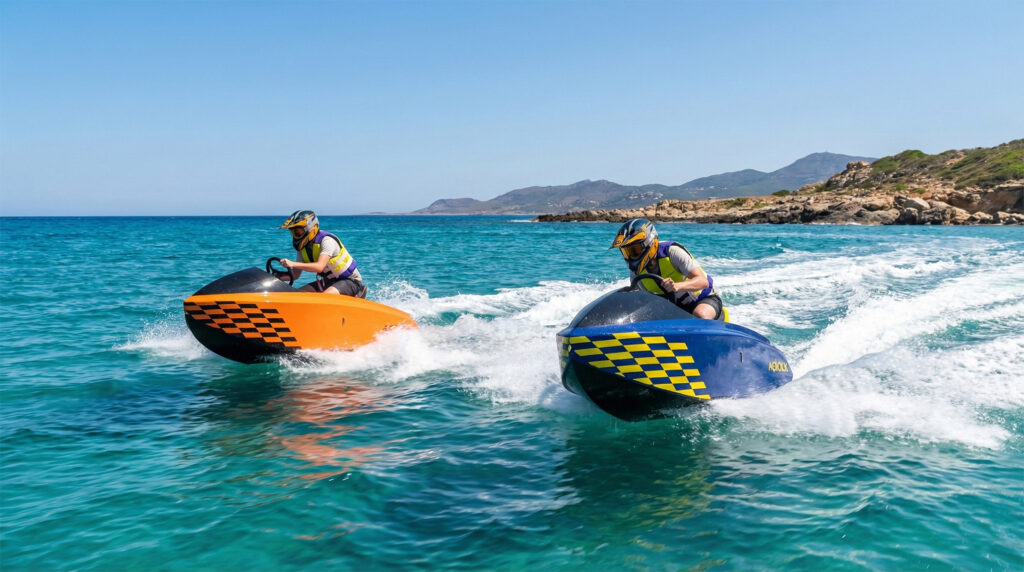
Choosing between an electric mini jet boat and a small petrol craft is not about fashion or novelty. It is about ownership reality: cost over time, safety profile, maintenance burden, and suitability for how Australians actually use sheltered waterways. This comparison assumes responsible ownership, not extreme performance use.
Petrol craft often appear cheaper upfront, particularly on the used market. Electric mini jet boats generally carry a higher initial price due to batteries, controllers, and specialised components. Over time, however, ownership costs diverge.
Petrol ownership includes:
Electric ownership includes:
For frequent short-session users, electric ownership often becomes more predictable and less burdensome.
Petrol engines are familiar but mechanically complex. Carburettors, fuel injection systems, cooling circuits, and exhaust components all require attention. Electric systems have fewer moving parts but demand electrical integrity, corrosion control, and battery care discipline. Jet drives themselves—electric or petrol—require intake inspection and impeller monitoring regardless of fuel type.
Petrol craft introduce risks related to fuel handling and vapours, hot engine components, and noise masking awareness. Electric craft introduce different considerations: battery safety, silent operation near swimmers, and strict charging and storage practices. When paired with jet propulsion, electric craft offer meaningful advantages in mixed-use environments, particularly where propeller exposure is a concern.
Petrol excels at long, continuous operation. Electric excels at short-to-medium planned sessions. In practice, most sheltered-water users operate within a predictable radius. For these users, electric runtime—when honestly specified—is sufficient and often preferable.
Quiet operation matters in canals, resorts, residential zones, and managed waterways. Electric mini jet boats integrate more easily into these environments, reducing complaints, restrictions, and conflict.
Petrol resale is driven by engine hours and service history. Electric resale is driven by battery health and documentation. Transparency improves outcomes for both.
Electric mini jet boats suit owners who value low noise and low disturbance, predictable, short-session use, and reduced mechanical complexity. Petrol craft suit owners who require extended runtime without charging and remote access without infrastructure. Neither is inherently superior. Suitability is determined by usage discipline.