
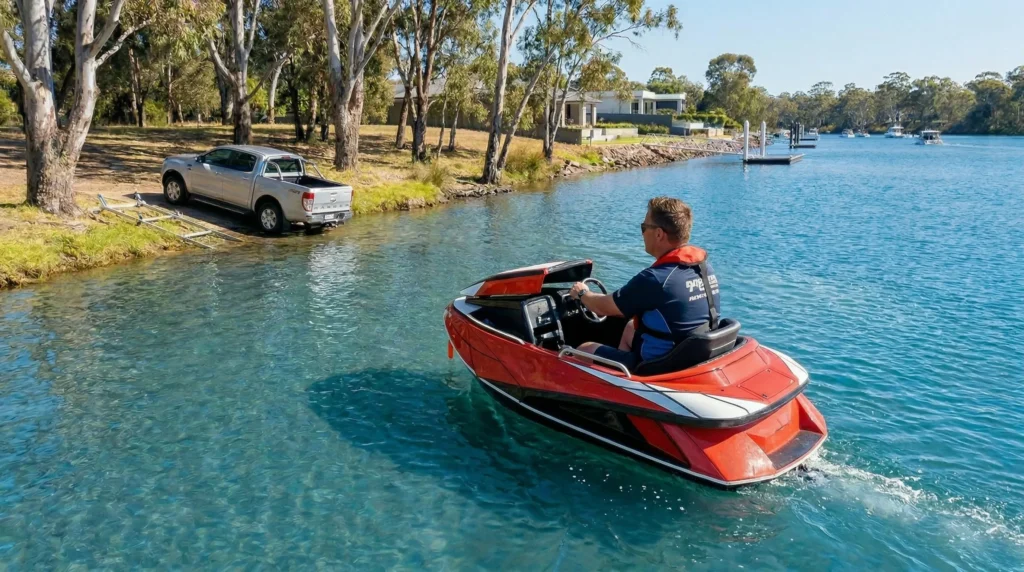
A practical, safety-focused, performance-driven buyer’s guide for modern Australian conditions
Electric mini jet boats represent one of the most significant shifts in recreational watercraft design in decades. They challenge long-held assumptions that speed requires size, that performance demands petrol, and that boating must involve trailers, high servicing costs, and storage complications.
This guide exists to remove confusion, cut through marketing noise, and provide clear, real-world purchasing knowledge — based on engineering realities, safety standards, and practical ownership considerations. By the end, you should understand what matters, what doesn’t, and why electric mini jet boats now offer a level of value and usability previously unavailable to most buyers.
An electric mini jet boat is not a jet ski, nor is it a toy. It is a compact, high-performance personal watercraft designed around jet propulsion rather than propellers, powered by advanced electric motors and battery systems.
Unlike traditional boats:
Crucially, modern electric mini jet boats achieve jet ski-comparable speed and agility, but without the mechanical complexity, noise, cost, and maintenance burden associated with internal combustion engines.
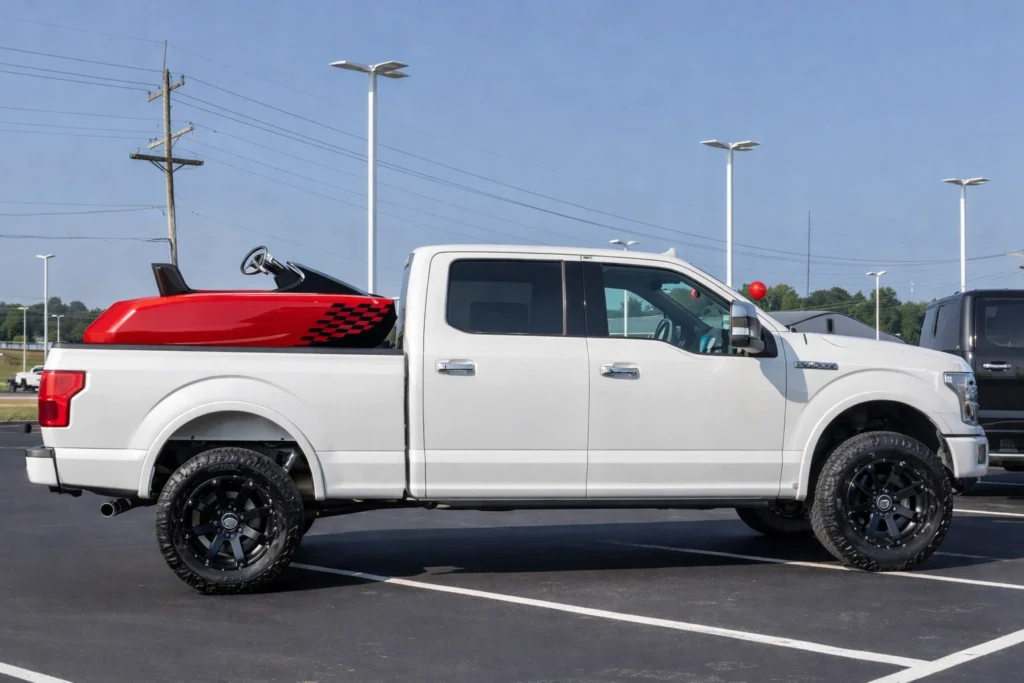
For many buyers, the most underestimated benefit is the removal of the trailer entirely.
Traditional jet skis and small boats require:
Electric mini jet boats eliminate this.
Most models are:
This fundamentally changes how often the craft is used. Owners are no longer constrained by logistics — they use them more often, because it is simply easier.
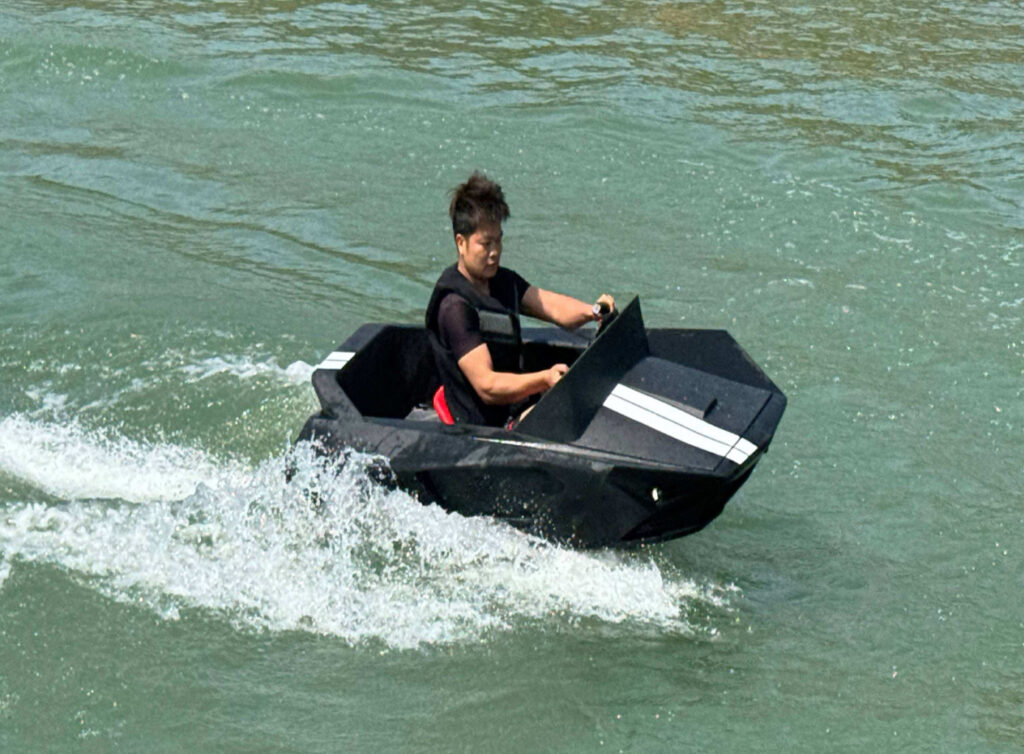
A common misconception is that smaller means slower. With electric propulsion, this is no longer true.
Electric motors deliver maximum torque instantly, unlike petrol engines that must rev to generate power. This results in:
Modern jet pump systems convert electric power efficiently into forward thrust, allowing compact hulls to:
In real-world terms, well-designed electric mini jet boats deliver:
For most recreational use — rivers, lakes, bays, resorts, and private property — the performance difference is negligible, while the ownership difference is dramatic.
When dealing with high-energy lithium battery systems and marine environments, standards are not optional – they are critical.
European safety and manufacturing standards are among the strictest in the world, particularly relating to:
Poorly regulated electric watercraft pose real risks:
European-aligned systems are engineered to:
In practical terms, European standards equate to peace of mind — not marketing slogans.
The battery is the heart of any electric jet boat.
High-quality systems prioritise:
A well-designed electric mini jet boat delivers consistent, usable runtime, rather than short bursts followed by heat-related power reduction.
Electric mini jet boats fundamentally transform ownership costs.
Electric systems involve:
Over time, the cost difference is not marginal — it is significant. Many owners find that running costs drop to a fraction of traditional watercraft ownership.
One of the most immediately noticeable differences is silence.
Electric jet boats:
This makes them especially suitable for:
It also makes the experience more refined — closer to performance driving than mechanical thrashing.
Beyond compliance and engineering, operational safety matters.
Electric mini jet boats offer:
For families, councils, resorts, and professional users, this fundamentally changes risk profiles.
These crafts are particularly well-suited to buyers who value:
They are not compromises — they are purpose-built solutions for modern watersport use.
When evaluating electric mini jet boats, informed buyers should focus on:
Well-designed electric mini jet boats do not merely replace existing watercraft — they eliminate long-standing pain points that previously limited enjoyment.
Electric mini jet boats sit at the intersection of:
They deliver jet ski-level enjoyment, remove the burden of trailers, dramatically reduce operating costs, and meet modern safety expectations — all while aligning with stricter environmental and regulatory realities.
For buyers seeking performance without complexity, and excitement without compromise, electric mini jet boats represent not a trend — but a logical evolution.